Meridian, IDSame-day service/Free estimates/Licensed & insured(208) 231-4591

Eagle, Meridian

What Roller Failure Looks Like in Eagle's 2000s-Era Garage Doors

Eagle, ID homes built mostly after 2005 see roller failure early thanks to severe cold; here's what the repair takes and what to expect from Meridian.

What Roller Failure Looks Like in Eagle's 2000s-Era Garage Doors in Meridian
Serving Meridian, IDBackground-checked techsHonest, upfront pricingFast local response

On the truck

Parts We Carry

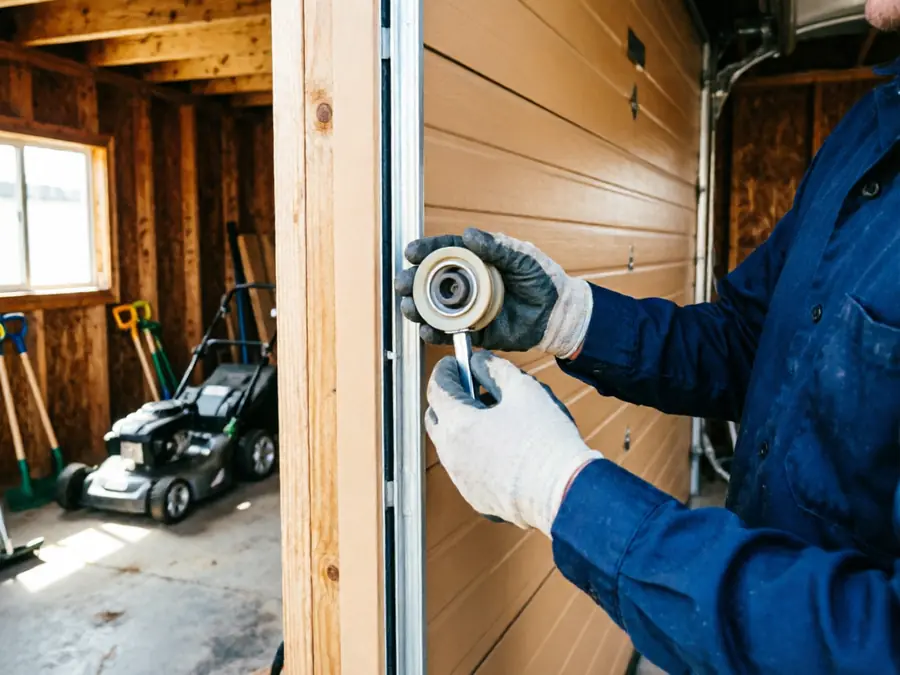
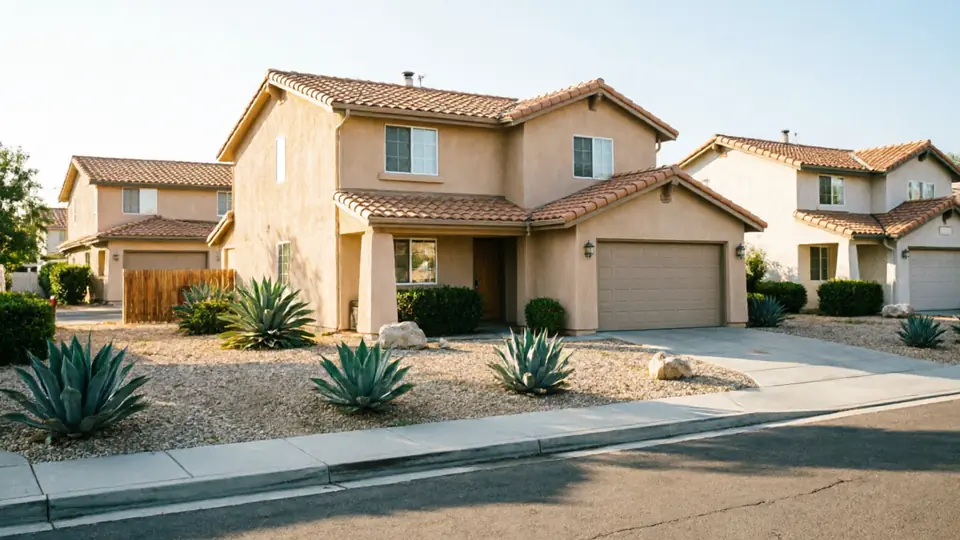
Eagle runs a median household income of $118,037, well above the $75,270 median across the rest of the territory we cover. That number matters here because it changes the math on a roller job before we even open the truck: most owners at this income level skip the patch-one-roller approach and ask for a full set swapped at once, rather than coming back out in eighteen months for the next one that's about to go. We carry sealed ball-bearing steel rollers and nylon-tired rollers, both in the stem lengths that fit the standard track spacing used on doors built through the 2000s, which is most of what's on the ground here. We do not stock every extended-life or quiet-roller specialty size on the truck, so if you want a less common stem length or a premium quiet kit, that can mean a short order wait rather than a same-visit swap. For a straight steel-to-steel replacement, we're usually set without ordering anything.

Parts We Carry

Local causes

Why This Fails Locally

Why This Fails Locally

Eagle's housing stock sits right around a median build year of 2005, in line with the broader service area's 1977-2009 range and its 2003 median. Doors from that era were hung with the hardware standard at the time: steel roller stems with a plastic bearing core, usually a nylon tire pressed on. That bearing core is the part that fails first, not the track. It dries out, the lubricant that keeps it turning smooth breaks down, and the roller starts riding rough inside the bracket instead of spinning. In a severe cold climate like this one, that failure comes faster. Cold makes the nylon tire brittle, and brittle nylon chips and flat-spots instead of wearing evenly. Once a tire has a flat spot, every rotation puts a thump into the track, and that thump is what loosens the bracket screws over time. It's a cold-climate failure mode more than an age failure mode, and it's specific to the roller hardware that was standard on doors built in this window, not something that shows up the same way on older torsion setups.

Warning signs

How It Shows Up

The first sign is usually sound: a rhythmic grinding or squeal as the door travels, timed to the rotation of one bad roller rather than a constant noise the whole way up or down.

Jumping at one spot

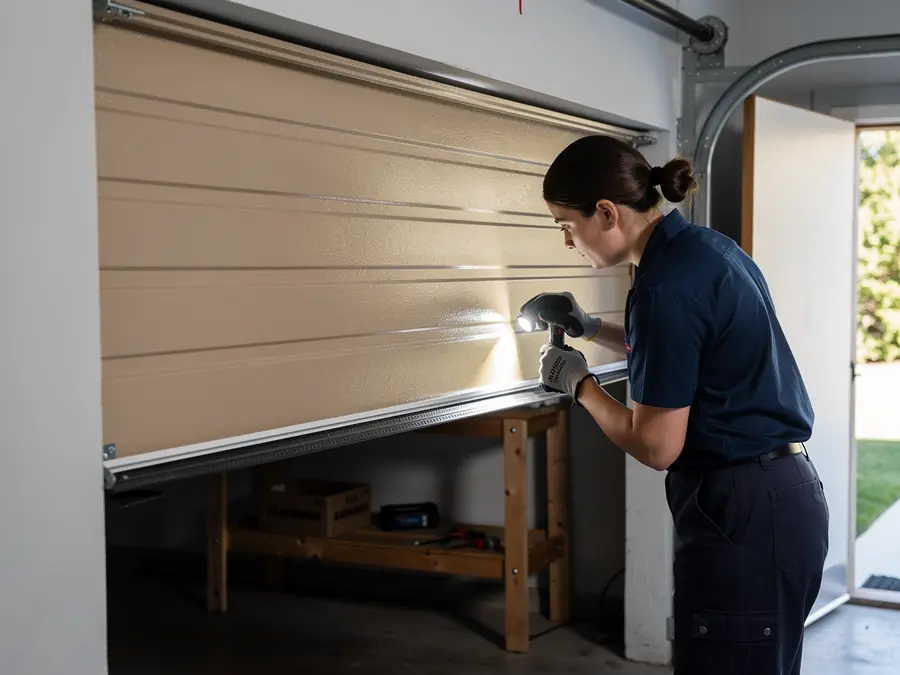
Some owners notice the door shudder or jump slightly at the same spot in the track every cycle, which is the flat-spotted tire catching as it rolls through. If you look at the rollers themselves with the door open, a cracked or chipped nylon tire is visible without needing to pull anything apart.
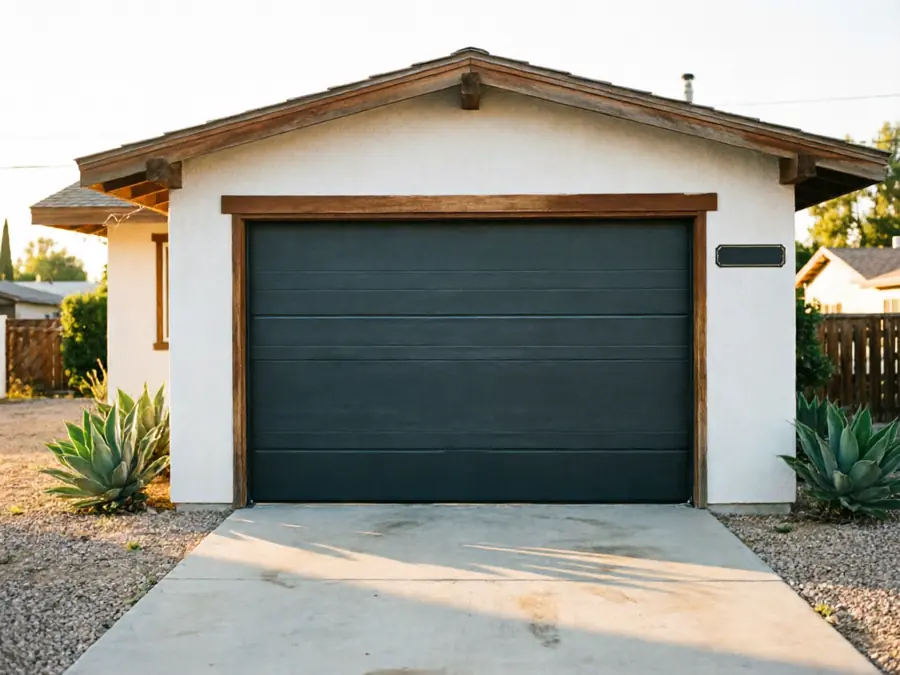
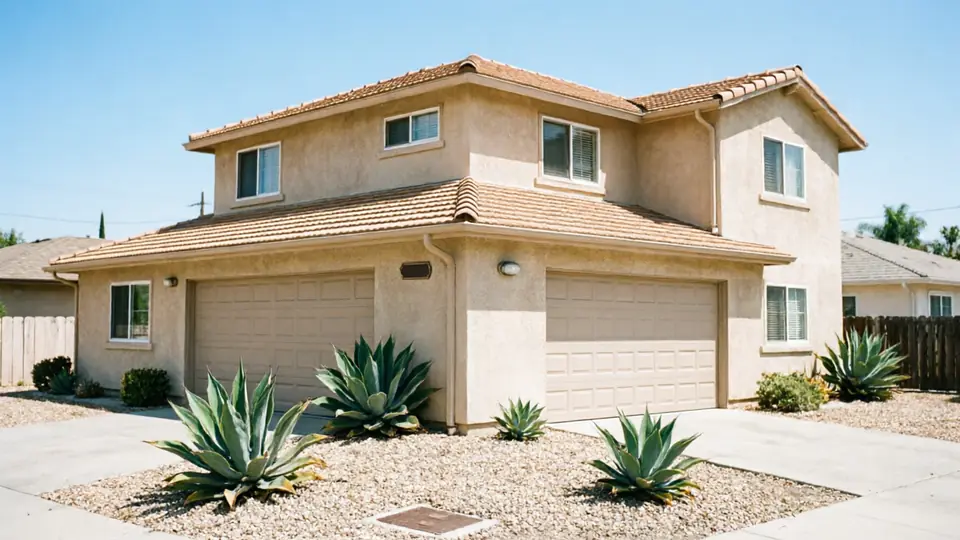
Cracked roller leaves bracket

Left alone, a cracked roller eventually works its way partway out of the bracket, and the door starts to ride crooked in the track, which puts load on the next roller over and speeds up its failure too.

Louder at top of travel

We also see this surface as a door that's noticeably louder at the top of its travel than the bottom, since the top rollers carry more side-load on these track geometries. None of this is urgent on day one, but it doesn't fix itself, and it does spread to the hardware next to it.

The repair

What the Repair Takes

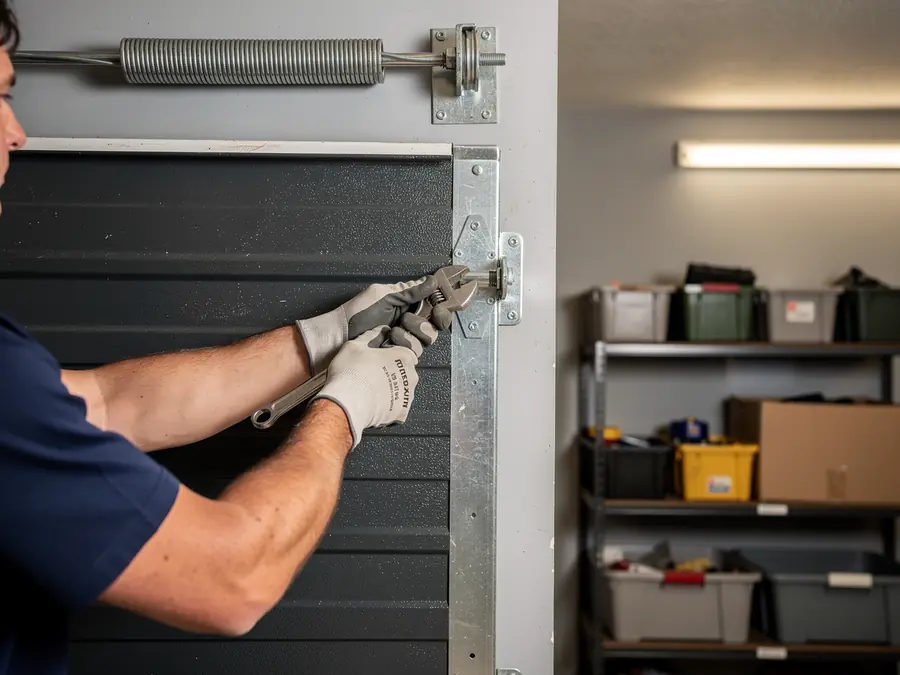
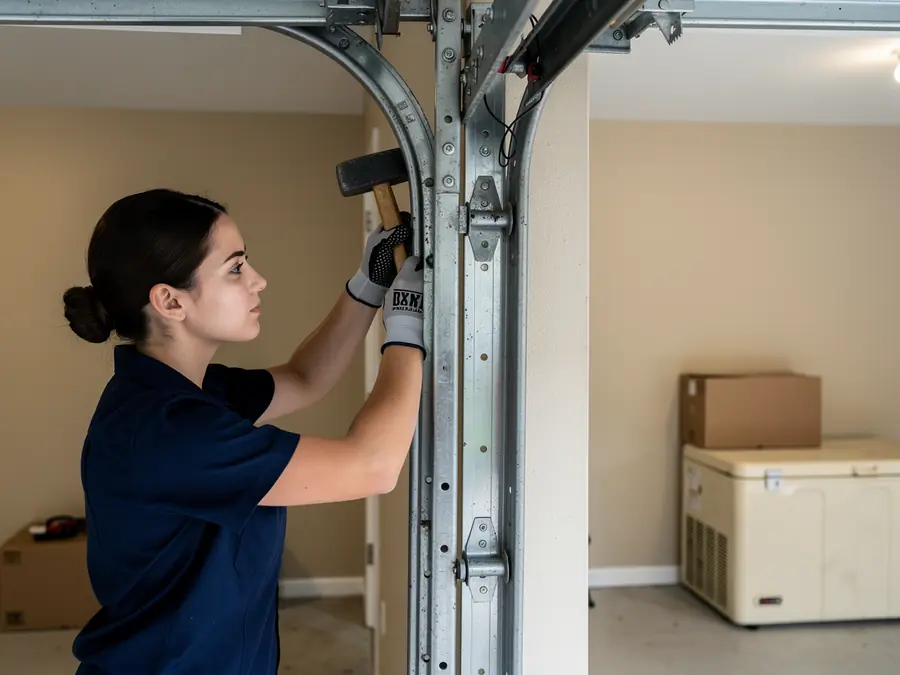
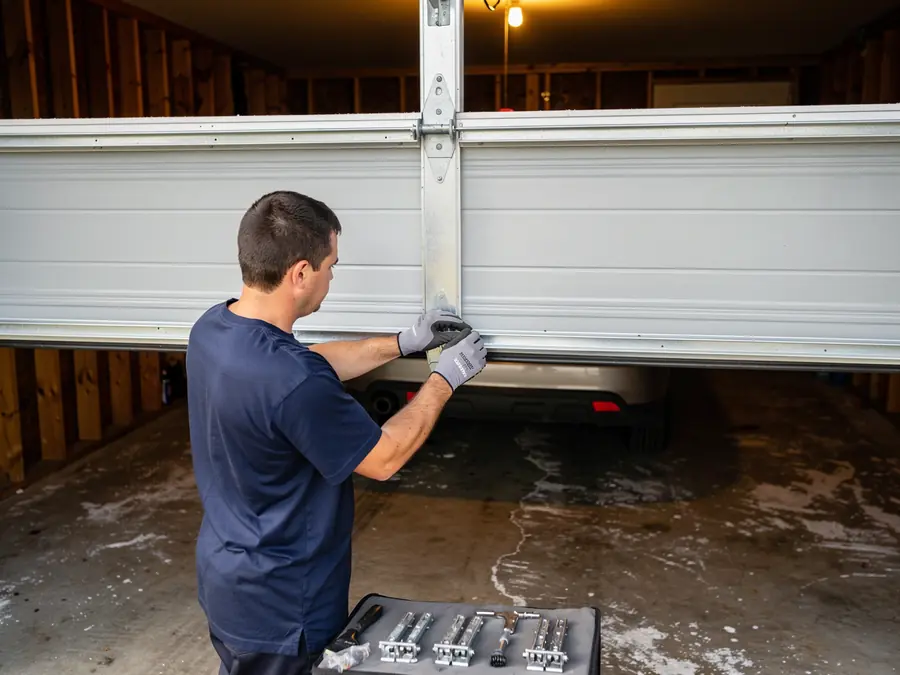
We pull the door off its rollers one bracket at a time, working the track open just enough to slide the old roller stem out and the new one in, then reseating the bracket and checking the track alignment before moving to the next one.

  1. Full-set roller swap

    On a standard 2000s-era setup it's a full-set swap most owners choose rather than a single roller, for the reason above: once one roller's bearing core is dried out, the rest are close behind, on the same hardware, installed the same year.

  2. Hinge and cable check

    We check cable tension and hinge wear while we're in there, since loose hinges are often what let a flat-spotted roller start the shudder in the first place.

  3. Leave spring alone

    We don't touch the torsion spring unless it's actually the problem - swapping rollers doesn't require opening up the spring system, and we're not going to bill you for work the door doesn't need.

Downtime

How Long You Are Without the Door

How Long You Are Without the Door

The door stays closed and unusable only for the span of the actual roller swap itself, not before or after. We work one side of the track at a time, so the door never comes fully apart - it's never left open to the weather or unsecured while we work. Most full-set jobs on a standard two-car door finish in a single visit, with the door back on its track and cycling smooth before we leave. If a bracket is bent or a track section needs straightening along with the roller swap, that adds time to the same visit rather than requiring a second trip. We're coming from Meridian, six miles away, so there's no separate dispatch delay built into scheduling an Eagle job versus one closer to the shop.

DIY or pro

Can You Do This Yourself

A single nylon roller on the bottom of the door, away from the cable and spring, is a reasonable DIY swap if you're comfortable with a ladder and a socket wrench - unclip the bracket, slide the old roller out, slide the new one in. The rollers up near the top of the track, close to the cable drum and the torsion spring, are a different story. The spring on a residential door holds enough stored tension to cause a serious injury if it lets go while you've got a bracket open near it, and we don't recommend working that area without knowing exactly what's under load. If you're swapping a full set and you're not sure which rollers sit clear of the spring system, that's the point where it's worth having someone else do it.

Can You Do This Yourself

Questions

Common questions

Why do my rollers keep cracking every winter?

Nylon roller tires get brittle in sustained cold, and this area sees severe cold swings through the winter. A brittle tire chips or flat-spots instead of wearing evenly, which is why roller failure here tends to cluster in the cold months rather than spreading evenly across the year.

Should I replace one roller or the whole set?

If your door is from the mid-2000s era common in Eagle, the other rollers were installed the same year on the same hardware and are close behind the one that failed. Most owners here replace the full set in one visit rather than coming back for each roller as it goes.

Do you carry parts for older torsion setups too?

We carry the standard steel and nylon rollers that fit the track spacing used on doors built through the 2000s, which covers most of what's on the ground in this area. Less common stem lengths or specialty quiet-roller kits sometimes need a short order rather than a same-visit swap.

How far out is Meridian from Eagle for a service call?

About six miles. That's close enough that scheduling a roller job in Eagle doesn't add a separate dispatch delay compared to jobs closer to the shop.

Ready when you are

Need a garage door sorted in Meridian?

Meridian Garage Door Co repairs and installs garage doors, springs and openers in Meridian, ID and the surrounding area.

Certified Experts Quality Assured
Call Now(208) 231-4591