
Flat-spotted steel rollers
On the galvanized steel rollers that shipped standard on most doors built here between 1977 and 2009, the usual failure is a flat spot worn into the wheel - you'll feel it as a thump at the same point in every cycle.
Meridian, ID
Worn or cracked rollers on Meridian's 1980s-2000s doors cause grinding, binding, and off-track panels. We replace them with steel or nylon rollers built for cold winters.
Watch-outs
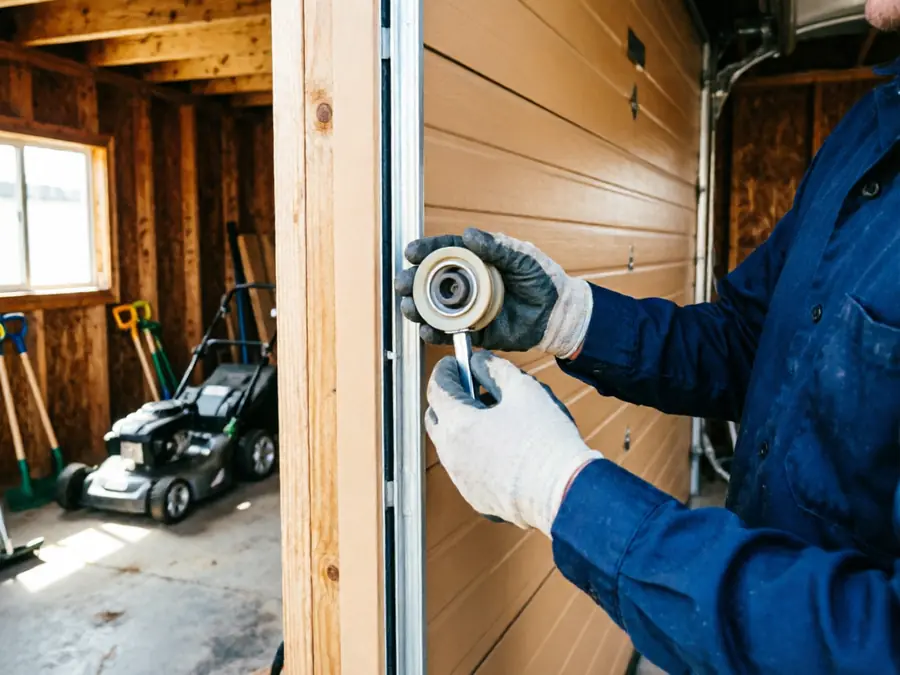
Rollers take more abuse than any other moving part on the door. Every open and close cycle runs them through the track, and over thousands of cycles the wheel wears down, the bearing dries out, or the stem bends.
On the galvanized steel rollers that shipped standard on most doors built here between 1977 and 2009, the usual failure is a flat spot worn into the wheel - you'll feel it as a thump at the same point in every cycle.
On the cheaper plastic rollers some builders used, the wheel just cracks and chips, and chunks of it end up on your garage floor. Once a roller is worn down past its original diameter, it rides loose in the track instead of filling it.
That lets the door rock side to side as it travels, which stresses the hinges above and below that roller and can pull a hinge bracket loose over time. Left long enough, a badly worn roller will jump the track entirely, usually on the bottom panel where the door takes the most load coming off the floor.
At that point you're not looking at a roller swap anymore - you're looking at a bent track too. A single bad roller rarely travels alone. If one wheel has worn out from age, the other nine or eleven on that door are close behind, since they all installed on the same day and carry a similar load.
The repair
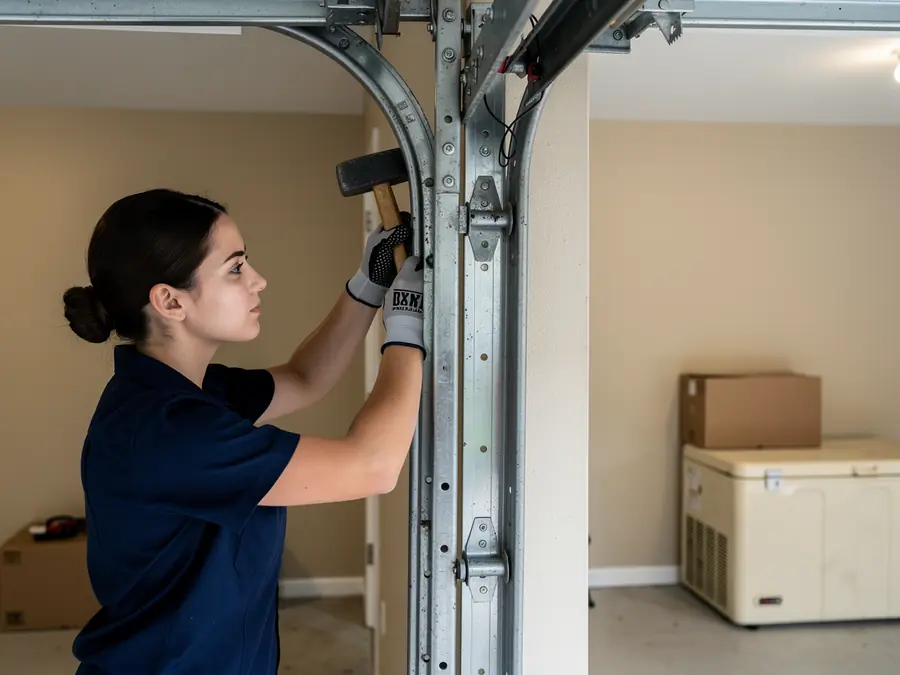
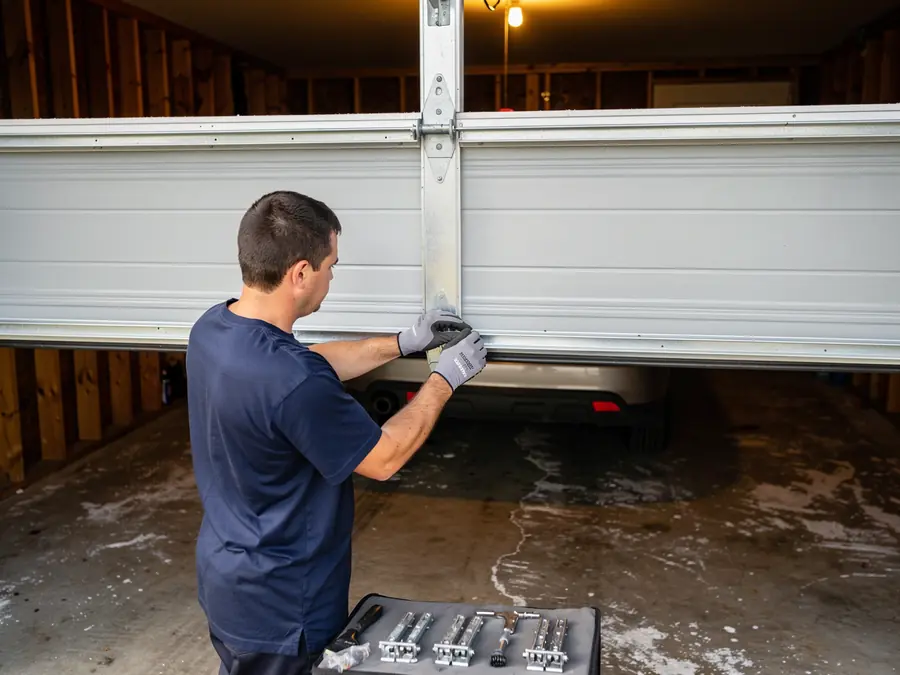
We pull the old rollers one hinge at a time, working up both sides so the door stays supported in the track the whole time - nothing drops, nothing swings loose.
On a standard double door that's typically ten rollers, sometimes more on heavier insulated panels. We check the track alignment and the hinge brackets as we go, since a roller that failed from a bent track will just fail again if we swap the wheel and ignore the cause. For most houses in the Meridian area we install sealed-bearing nylon rollers instead of the stamped steel ones that came from the factory.
Nylon runs quieter, doesn't need the periodic lubrication steel does, and doesn't develop the flat-spot wear pattern as fast. If a track is bent beyond what a roller swap will fix, that's a separate repair, and we'll tell you up front before anything gets started rather than padding the job.
One limitation worth stating plainly: if the rollers failed because the opener has been forcing a door that's already binding - wrong spring tension, a misaligned track, a warped panel - new rollers won't fix that underlying problem. We'll flag it if we see it, because a roller job on top of a bad spring setup just means you're back in six months.
Local causes
Meridian's housing stock is mostly 2000s construction, with a median build year of 2003 and most of the stock across the service area's named areas dating from 1977 to 2009. That means a large share of doors in this market are now old enough that their original rollers have hit or passed typical wear life, especially on houses built in the earlier part of that window.
The climate is the other half of it. This is a severe cold band, and steel rollers depend on grease inside the bearing staying workable to turn smoothly. Cold grease thickens, bearings spin harder, and the extra resistance accelerates wear on the wheel surface - especially on the first cold-morning cycle of the day, when the grease hasn't warmed up yet. Nylon rollers with sealed bearings handle that swing in temperature better than the stamped steel originals, which is why we don't default back to steel when we replace.
Put those two things together - a housing stock concentrated in a 30-year window that's now aging past original hardware life, in a climate that's harder on bearings than a mild one - and roller wear shows up as a cluster, not a one-off. It's a predictable maintenance item here, not a random breakdown.
Warning signs
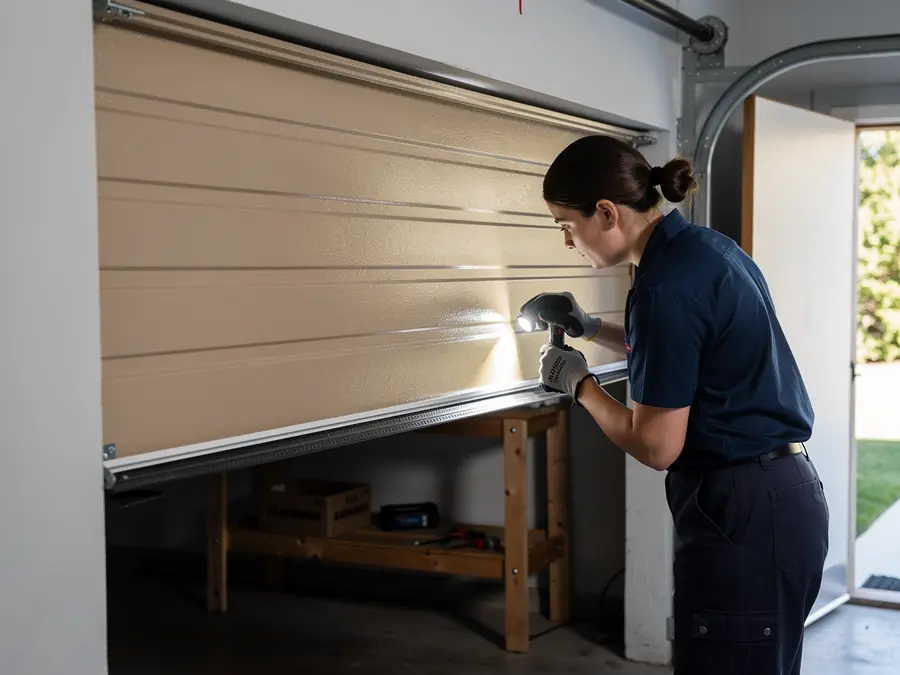
The earliest sign is sound: a grinding or rattling noise that happens at the same spot in the door's travel every time, rather than randomly.
That's the flat spot on a worn wheel hitting the track. Next comes visible wobble - watch the door from the side as it closes and you'll see it rock instead of tracking straight.
In cold weather the symptom often gets worse first thing in the morning, before the door has cycled a few times to work the grease loose, then seems to ease up once it's run a bit. That's consistent with bearing drag rather than a spring problem, which tends to show up as the opener straining or the door feeling heavy regardless of temperature.
If you see white or gray plastic chips on the garage floor near the track, that's a cracked nylon roller shedding material, and it won't get better on its own. Worn rollers are a normal maintenance item on houses in this age range - catching it with a roller swap is a lot cheaper than catching it after the door jumps the track.
Questions
Most double doors have ten rollers, and when one fails from age the rest are usually close behind since they installed and wore together. We generally recommend replacing the full set rather than one or two, so you're not back out for the next one in a few months.
Steel rollers depend on grease inside the bearing to run smooth, and in a severe cold climate that grease thickens and makes the bearing work harder, wearing the wheel faster. Sealed nylon rollers handle temperature swings better and don't need the periodic greasing steel does.
Yes, if it's left long enough. A worn roller rides loose in the track instead of filling it, which lets the door rock as it travels and stresses the track and hinges. Eventually it can jump the track, usually on the bottom panel where the load is heaviest.
Not on their own. A heavy-feeling door usually points to a spring problem, not a roller problem. If both symptoms are present we'll check the spring tension too, since new rollers on top of bad spring setup tends to fail again.
Explore more
Ready when you are
Meridian Garage Door Co repairs and installs garage doors, springs and openers in Meridian, ID and the surrounding area.