
Blog
What Meridian's Builder-Grade Doors Need in a Cold Winter
Most Meridian garages were built between 1977 and 2009, with the bulk going up around 2003. Here's how that building boom and our cold winters affect your door.
Season by Season
Meridian sits in a cold-severe climate band, and that swing matters more to a garage door than most people think. Steel contracts in the cold, and a torsion spring that's been winding and unwinding for fifteen or twenty years loses tension faster once temperatures drop hard. Late fall through winter is when we see the spike in snapped springs and openers straining to lift doors that have gotten heavier to move because the rollers and hinges have stiffened up. Spring and early summer bring the opposite problem: weatherstripping that cracked over winter lets in dust and swings in temperature, and tracks that shifted slightly with the freeze-thaw cycle need realigning. None of this is dramatic. It's wear that shows up on a schedule tied to the cold, not to anything you did wrong. If your door has started groaning or hesitating on the first cold mornings of the year, that's the climate talking, not a mystery problem.
The Situation
The housing here was mostly built between 1977 and 2009, with the median landing around 2003, and the stock across the eight main areas we work in is overwhelmingly 2000s construction. That means a huge share of the garage doors and openers in town are from the same narrow window of builder-grade equipment: steel sectional doors, chain or early screw-drive openers, and torsion spring systems rated for a service life that a lot of them are now at or past. This isn't a town of mismatched eras where every house needs something different. It's a town where thousands of garages are hitting the same wear point within a few years of each other, because they were all put in around the same time. That's useful to know, because it means the failure you're dealing with probably isn't unique to your house. It's the same spring, same opener gearset, same weatherstrip compound wearing out across a whole subdivision at once.
How Local Conditions Play In
Put the housing age and the climate together and you get a specific, local pattern. A torsion spring installed in 2003 on a builder-grade door was never spec'd for anything more than standard residential cycling, and twenty winters of cold-severe swings have used up more of that spring's rated life than the same spring would lose in a milder climate. The result: springs that were fine last February are the ones that let go this February. Openers from that era also weren't built with today's cold-start torque curves in mind, so they strain harder on frozen mornings, and that strain shows up as stripped gears or a motor that runs hot and cuts out. With 37,842 owner-occupied houses in the service area, most carrying hardware from that single building boom, we see this cluster hard in cold snaps rather than spread evenly through the year. It's not that Meridian garages are built badly. It's that a lot of them are the same age, in the same climate, hitting the same wall at once.
The Common Mistake
The mistake we see most is treating a stiff or noisy door as an opener problem when it's actually the spring giving out, or waiting until a spring fully breaks instead of replacing it when it's clearly near the end. On a house from the early 2000s, if one torsion spring is worn, the other usually isn't far behind, since they were installed as a pair and have carried the same cycles under the same winters. Replacing just the broken one is cheaper today and a second call next winter. We'll say plainly: we don't recommend patching an opener motor that's already straining on cold mornings just to put off a spring job, because the motor failure that follows usually costs more than doing the spring work now would have. If a door is original to a 2003-era house and showing multiple issues at once, replacing the aging components together is usually the better math than fixing them one at a time as they fail.
Questions
Common questions
Why do garage door springs break more in winter here?
Cold-severe winters put extra strain on torsion springs that are already near the end of their rated cycle life. A spring installed when your house was built in the late 1990s or 2000s has been through two decades of hard winter swings, and that's usually when it finally lets go, often on the coldest mornings.
My house was built in the early 2000s, is the opener original?
A lot of Meridian homes built in that window still have their original opener, since the heaviest building stretch here landed around 2003. If yours has never been replaced, it's old enough that gear wear and cold-start strain are both working against it.
Is it normal for the door to feel heavier in winter?
Yes. Cold tightens the torsion spring's steel and stiffens rollers and hinges, so a door that opens smoothly in July can feel sluggish or noisy in January. If it's dramatically harder to lift by hand with the opener disconnected, the spring is likely losing tension and worth checking before it fails outright.
Recommendation
You Might Also Like
More garage door guides for Meridian homeowners.
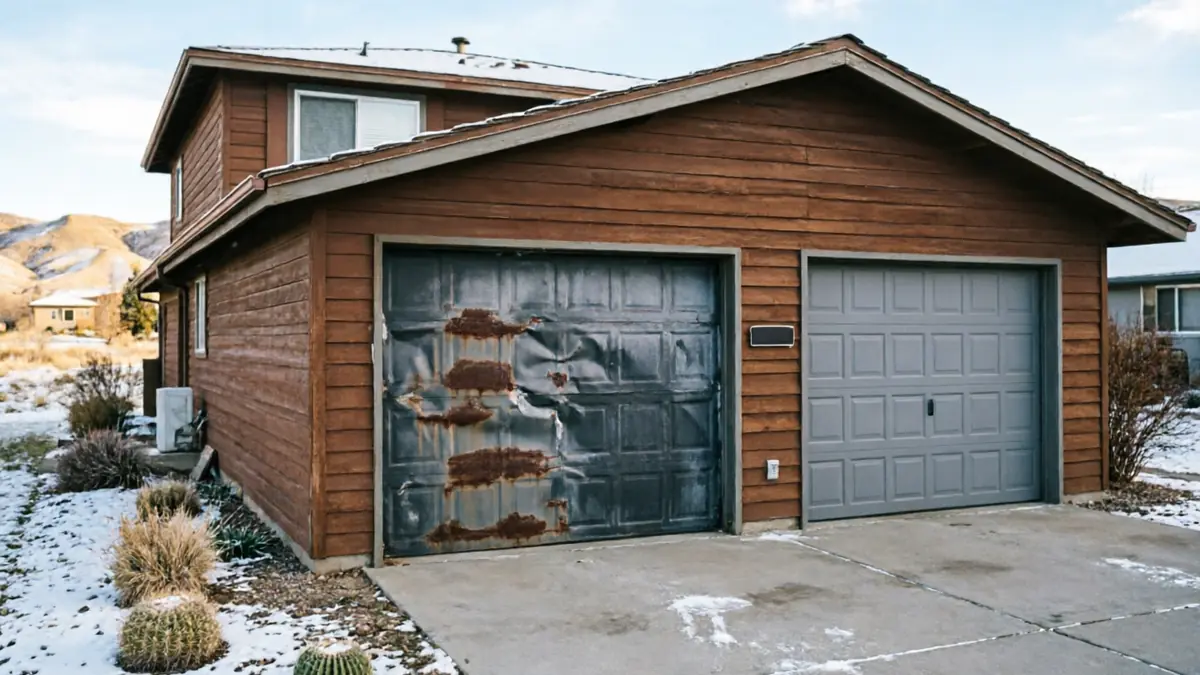 What Meridian's Winters Do to a Garage Door Built After 2000
How Meridian's cold winters and its mostly 2000s-era housing stock affect garage door springs, openers, and seals - and what actually breaks first here.
What Meridian's Winters Do to a Garage Door Built After 2000
How Meridian's cold winters and its mostly 2000s-era housing stock affect garage door springs, openers, and seals - and what actually breaks first here.
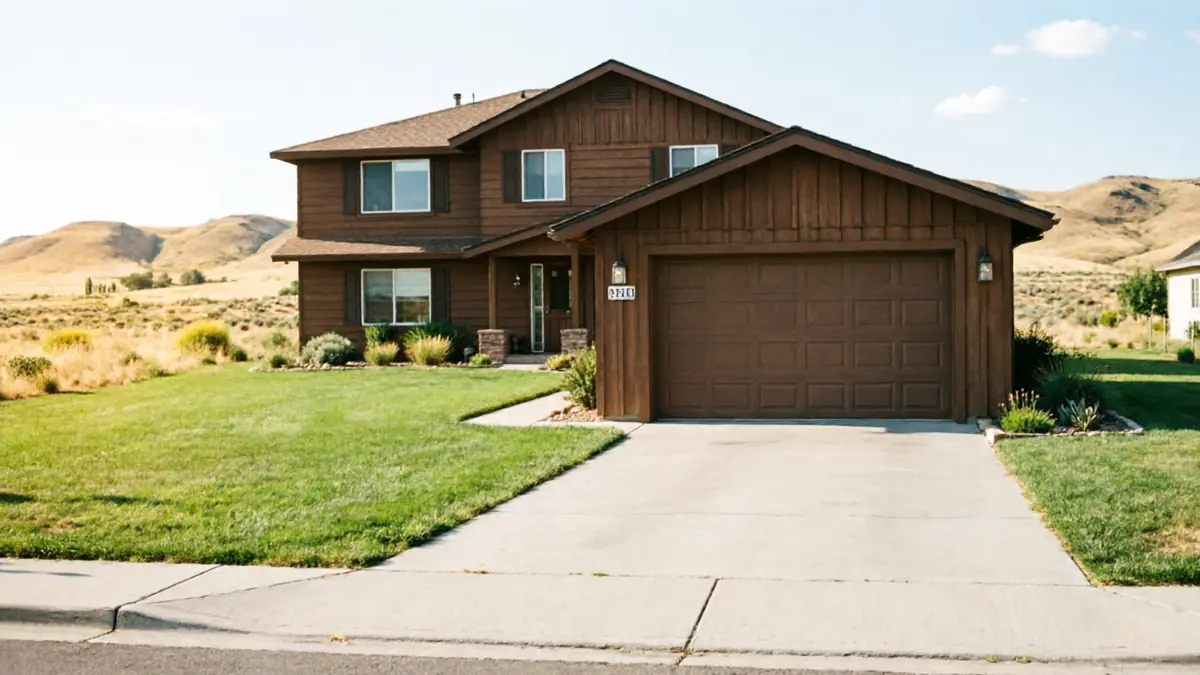 Openers, Cold Snaps, and Power Cuts in Meridian
Meridian homes built 1977-2009 run openers now reaching end of life.
Openers, Cold Snaps, and Power Cuts in Meridian
Meridian homes built 1977-2009 run openers now reaching end of life.
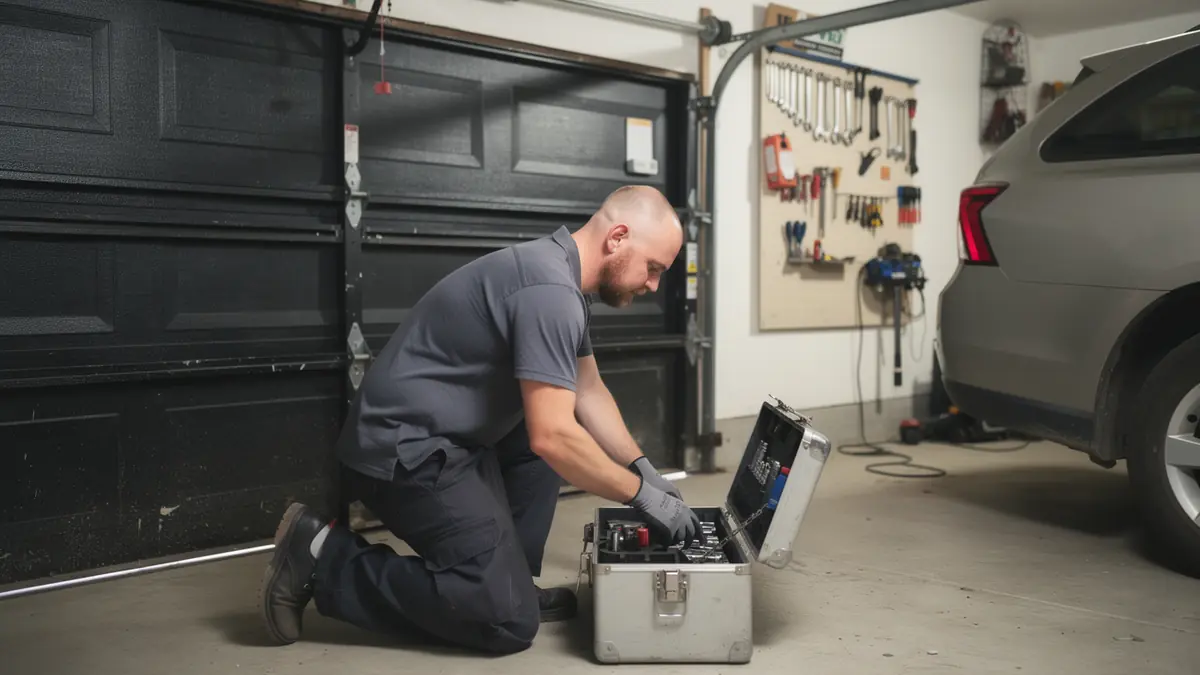 Fixing vs. Replacing an Older Garage Door in Meridian
Meridian's housing mostly dates from 1977 to 2009, built for a cold winter climate.
Fixing vs. Replacing an Older Garage Door in Meridian
Meridian's housing mostly dates from 1977 to 2009, built for a cold winter climate.
Ready when you are
Need a garage door sorted in Meridian?
Meridian Garage Door Co repairs and installs garage doors, springs and openers in Meridian, ID and the surrounding area.