
Blog
What Meridian's Winters Do to a Garage Door Built After 2000
How Meridian's cold winters and its mostly 2000s-era housing stock affect garage door springs, openers, and seals - and what actually breaks first here.
Season by Season
Meridian sits in a climate band classified cold and severe, which means the door hardware in your garage goes through a real temperature swing every year, not a mild one. Winter is when torsion springs lose tension fastest - cold steel doesn't flex the way it does in August, and a spring that was already near the end of its cycle count tends to snap on the first hard freeze rather than a warm afternoon. Openers slow down too; the grease in older gear sets thickens and the travel limits drift, so the door reverses or stalls partway up. Spring and fall bring their own issue: condensation on cold steel panels, which works into weatherstripping that's already stiff from winter and starts to crack at the corners. Summer is the easy season here - it's mostly about checking that winter didn't leave anything loose. If you own a home in this area, the pattern is the same every year: watch the door closely from the first cold snap through the deep of winter, because that's the window where something that was marginal in October finally lets go.
The Situation
Housing in and around Meridian mostly went up between 1977 and 2009, with the median build year landing around 2003. Across the eight named areas that make up the service footprint - places like Southeast Boise, Hillcrest, Veterans Park, and the Vistas - the stock skews heavily toward that 2000s construction wave. That matters for garage doors because it means most of the doors on these streets aren't custom or antique - they're the mass-production steel, foam-core panel doors that builders standardized on during that exact window, paired with torsion springs and openers sized to a fairly narrow range of door weights. The upside is that parts for this era are still common. The downside is that a huge number of these doors are now 15 to 25 years old, which is close to or past the rated cycle life of the original springs, and the foam-core insulation in doors that age has usually started to separate slightly from the steel skin, which changes how the door balances on the track.
How Local Conditions Play In
Put the housing stock and the climate together and you get a fairly specific failure pattern. A 2000s-era steel door with foam-core insulation handles cold by shrinking at the seams - slightly, but enough that the bottom seal stops making full contact with the slab, and enough that the top and side weatherstrip pulls away from the frame. That's not a defect, it's just what that generation of door does in a cold-severe climate after enough winters. On the hardware side, torsion springs installed when these houses were built are now old enough that cold-weather failure is common, not rare - steel fatigues faster at low temperatures, and a spring near its cycle limit will often choose the coldest morning of the year to go. Openers from that era also tend to lack the force-sensing adjustments that later models have, so a door that's dragging slightly from a shrunk seal can put real strain on the opener motor without tripping a safety reversal the way a newer unit would.
The Common Mistake
The mistake we see most in this area is homeowners treating a slow or noisy door as an opener problem when the door is actually fighting a seal or spring issue underneath. People replace the opener, the door still drags, and now they've spent money on the wrong part. Given how much of the local housing stock is the same 2000s-era build, it's usually worth checking the spring tension and the bottom seal before assuming the motor is the culprit. One honest limitation here: if a door's foam-core panels have separated badly or the frame has warped from years of seal failure, replacing the spring or seal won't fix it - at that point you're looking at a new door, not a repair, and we'll tell you that straight rather than keep patching a panel that's done.
Questions
Common questions
Why did my garage door spring break in the middle of winter?
Cold steel is more brittle than warm steel, and torsion springs installed when most Meridian homes were built - between 1977 and 2009 - are now old enough that many are near the end of their rated cycle life. A spring that's already marginal almost always fails on the coldest days rather than the mild ones.
Is my door's insulation actually failing, or is it just cold outside?
If your door is from the 2000s building wave that's common across this area, some seam separation in the foam-core panel is normal by now. It won't show up as visible damage - just a bottom seal that no longer sits flush and a draft along the sides that wasn't there a few years ago.
Should I repair or replace an older door?
If the springs and seals are the problem, repair usually makes sense. If the panels themselves have separated from the foam core or the frame has warped, repair won't hold and replacement is the honest answer. We'll tell you which situation you're in rather than sell a repair that won't last.
Recommendation
You Might Also Like
More garage door guides for Meridian homeowners.
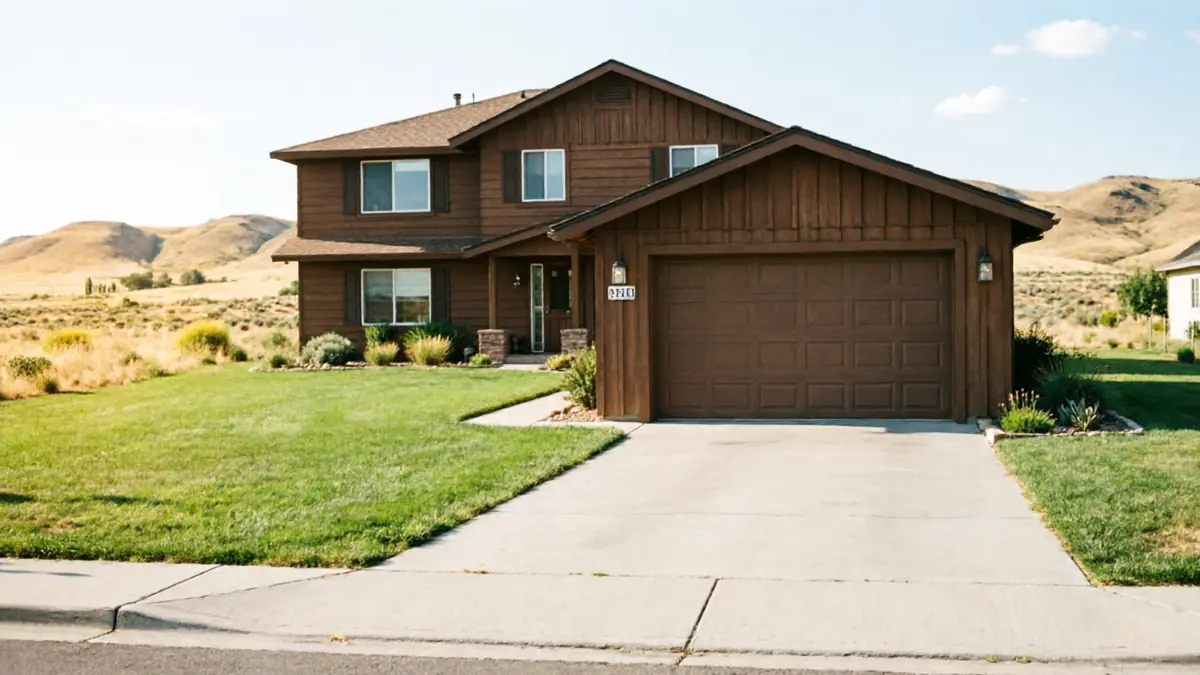 Openers, Cold Snaps, and Power Cuts in Meridian
Meridian homes built 1977-2009 run openers now reaching end of life.
Openers, Cold Snaps, and Power Cuts in Meridian
Meridian homes built 1977-2009 run openers now reaching end of life.
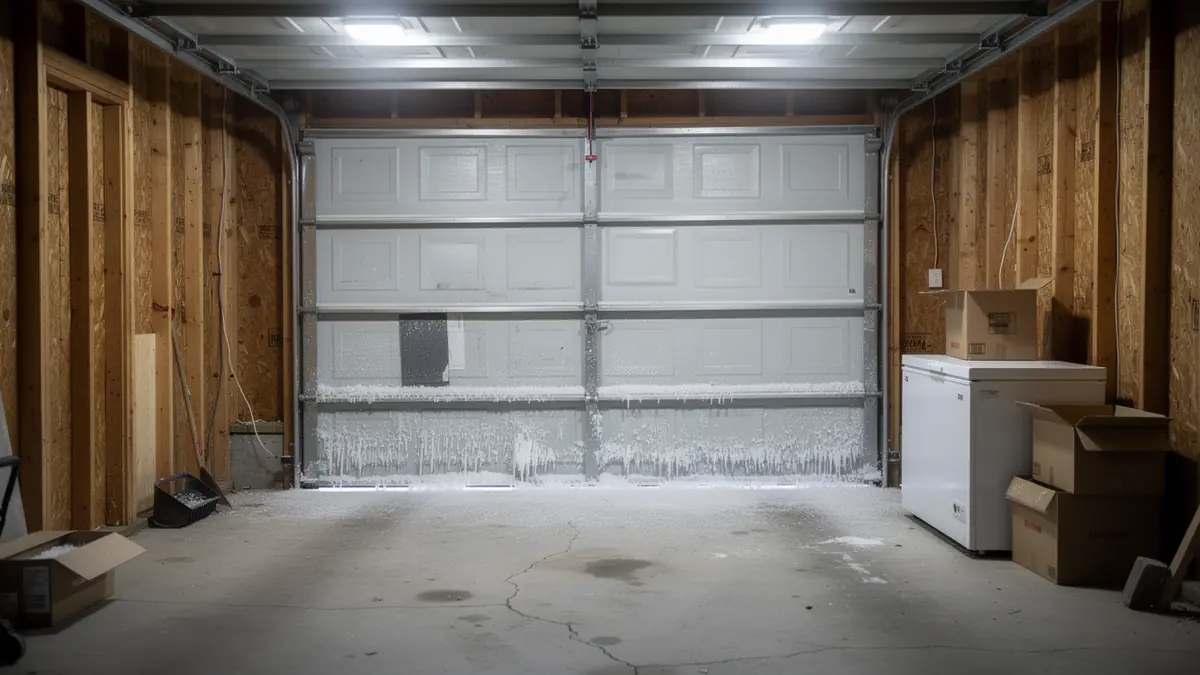 What Meridian's Builder-Grade Doors Need in a Cold Winter
Most Meridian garages were built between 1977 and 2009, with the bulk going up around 2003.
What Meridian's Builder-Grade Doors Need in a Cold Winter
Most Meridian garages were built between 1977 and 2009, with the bulk going up around 2003.
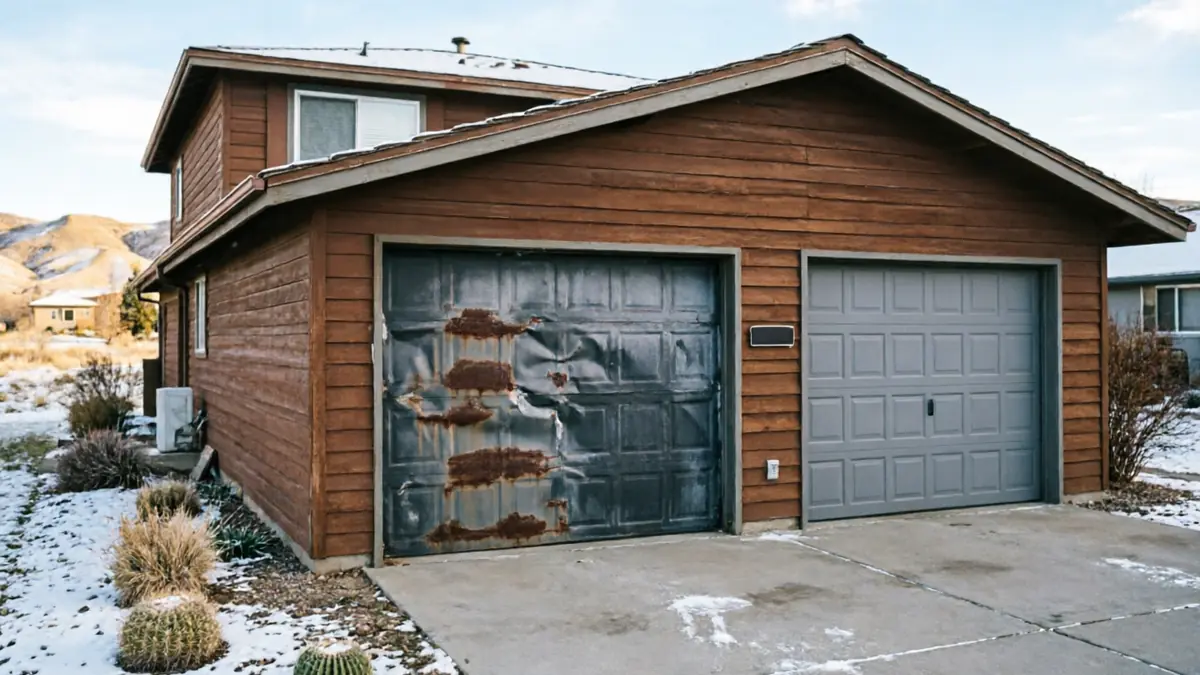 What a Garage Door Service Call Actually Covers in Meridian
A look at what a Meridian garage door service call actually checks, based on this area's 2000s housing stock and cold-severe winters, not a generic checklist.
What a Garage Door Service Call Actually Covers in Meridian
A look at what a Meridian garage door service call actually checks, based on this area's 2000s housing stock and cold-severe winters, not a generic checklist.
Ready when you are
Need a garage door sorted in Meridian?
Meridian Garage Door Co repairs and installs garage doors, springs and openers in Meridian, ID and the surrounding area.