Meridian, IDSame-day service/Free estimates/Licensed & insured(208) 231-4591

Meridian, ID

Garage Door Installation for Meridian's 2000s-Era Homes

Most Meridian homes date to 1977-2009, many built in the early 2000s. Original doors are aging out fast in our cold winters. We install doors that last.

Garage Door Installation for Meridian's 2000s-Era Homes in Meridian
Serving Meridian, IDBackground-checked techsHonest, upfront pricingFast local response
Local
Crews that work this area daily
Same-day
Response for most repair calls
Upfront
Pricing agreed before we start
Insured
Background-checked technicians

Watch-outs

What Can Go Wrong

Most houses in Meridian went up between 1977 and 2009, with the heaviest concentration built around 2003, during a stretch when builder-grade steel doors were the standard install.

Thin original single-layer steel

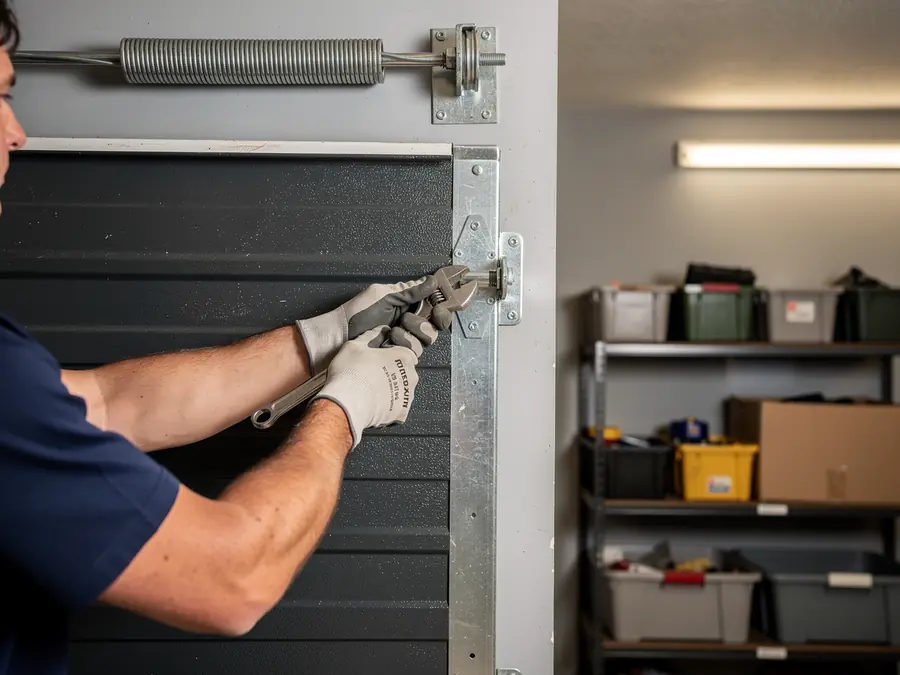
Those doors shipped with thin, single-layer steel, little or no insulation, and torsion springs sized to the bare minimum for the door's weight at install, not for twenty more years of use. On a door that age, the foam core (where there is one) shrinks and pulls away from the steel skin, the bottom seal hardens and cracks, and the spring - rated for maybe 10,000 cycles when new - starts showing fatigue right around the cycle count a house this age has put on it.
Hinge and roller wear

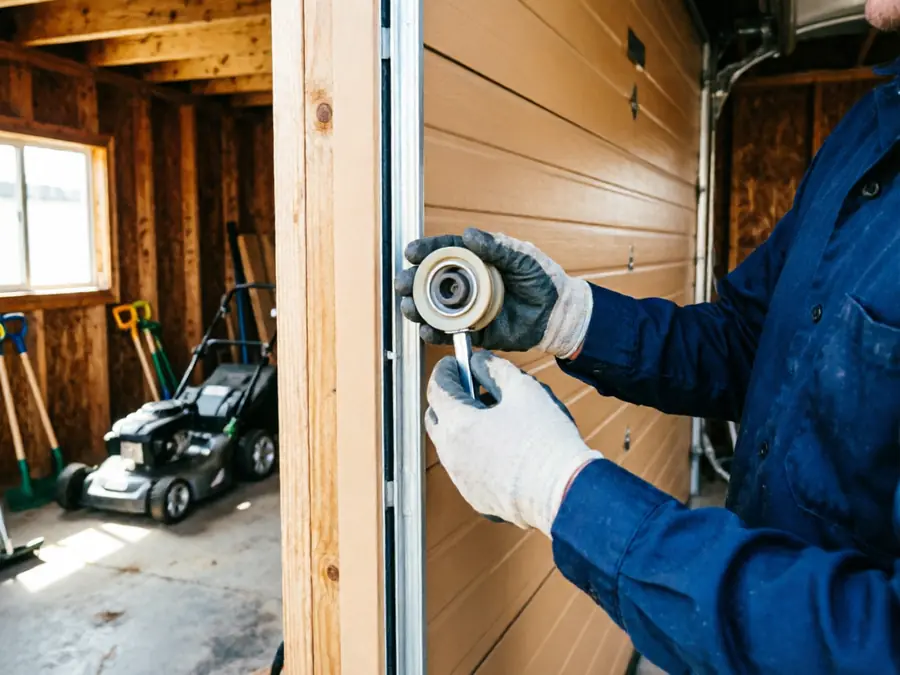
Hinges wear oval instead of round, rollers flatten on one side, and the track bolts that held fine in 2003 start pulling loose from builder-grade jambs. None of this is dramatic on its own.

Gradual decline before failure

It shows up as a door that's a little heavier to lift, a little noisier, a little slower to seal at the bottom - until one cold morning the spring goes or the opener can't pull the weight anymore.

The repair

What the Repair Takes

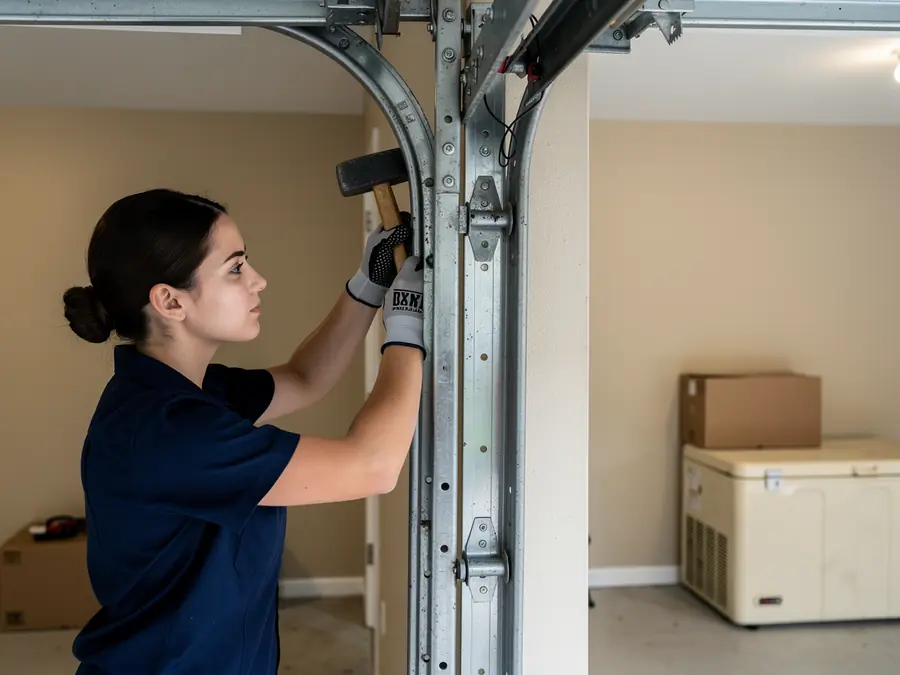
Installing a replacement door on a house from this era starts with pulling the old track and spring assembly, which on a 2000s build is usually bolted straight to a wood jamb that's taken twenty years of swelling and drying.

  1. Framing check before install

    We check that framing before anything new goes up - if the jamb is soft or the header's sagged, that's carpentry work we flag before we hang a new door on it, not after. From there it's a new torsion spring sized to the actual door weight (not the builder's original spec, which was often the cheapest spring that would pass), new track, and a door with an actual insulated core instead of a single steel skin.

  2. Opener compatibility on install

    Opener compatibility matters here too - a lot of these houses still have the original chain-drive opener from the same build year, and it's often at or past the point where it's worth replacing alongside the door rather than forcing an old motor to lift a new, heavier insulated panel.

  3. Out-of-square openings need more

    One limit worth saying plainly: if the opening itself is out of square from years of settling, that's a bigger fix than a door swap, and we'll tell you that before we quote the job, not after.

Local causes

Why This Fails Locally

Meridian sits in a cold-severe climate band, and that matters more here than it would somewhere mild, because the failure mode on a 2000s-era door is a freeze-thaw problem, not just an age problem. A foam core that's shrunk away from its steel skin lets cold air sit against the inside face of the door; on a severe-cold night that skin contracts, and the gap between foam and steel grows a little more with every cycle. Across the eight named areas of mostly-2000s housing stock in and around Meridian, that's not a handful of houses - it's a large share of the owner-occupied stock in the service area going through the same slow failure on the same schedule, because they were mostly built in the same narrow window. A door installed in 1998 and a door installed in 2006 are both now old enough that the hardware is fatigued, and both are sitting in the same cold-severe winters that accelerate seal and foam breakdown faster than it would in a milder climate band. That's the specific reason installation calls cluster by neighborhood and by age of subdivision rather than randomly.

Why This Fails Locally

Warning signs

How It Shows Up

The most common call is a door that's gotten noticeably heavier to lift by hand, which almost always means the torsion spring has lost tension - on a house from the early 2000s building wave, that's right on schedule.

Daylight at bottom seal

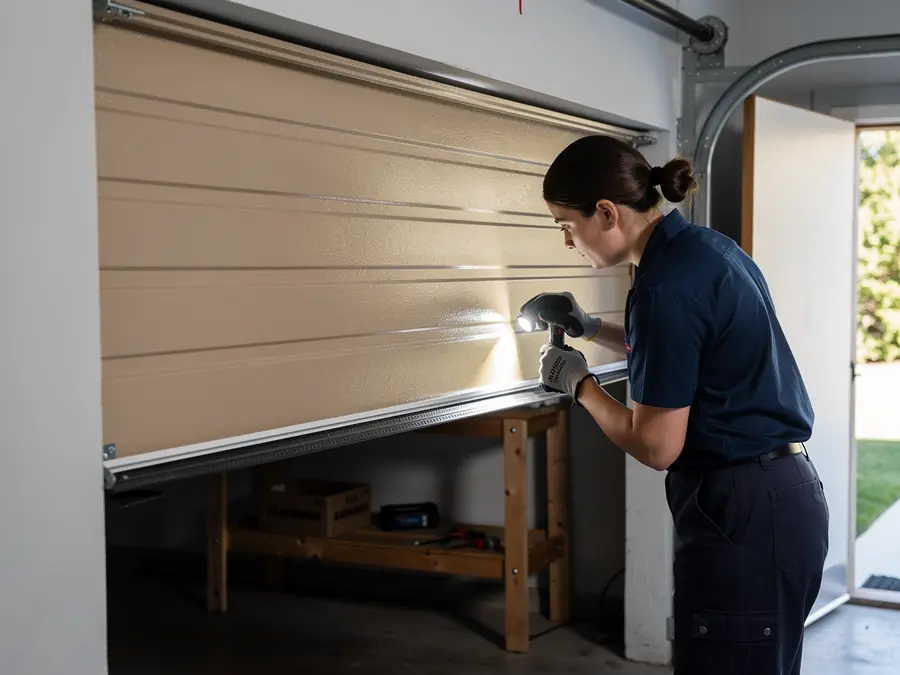
Close behind is a visible gap of daylight along the bottom seal even with the door shut, which on an insulated door usually means the core has pulled away from the steel and the seal can't compress evenly anymore.

Frost on interior face

Some owners notice it first as frost forming on the inside face of the door on hard-freeze mornings, which is the foam-gap problem making itself obvious. Others notice the opener straining - grinding, slowing down mid-cycle, or tripping the safety reverse - because the motor is fighting a door that's heavier and stiffer than the one it was installed to lift twenty years ago.

Opener strain signs

None of these are emergencies on day one, but they're the same handful of signs we see over and over on houses from this build era, and they're worth a call before the spring actually breaks with the door half open.

Questions

Common questions

How do I know if my garage door is original to the house?

If your house was built in the 2000s building wave common across Meridian and you've never replaced the door, it's almost certainly original. Look for a single-layer steel panel with no visible foam edge, a chain-drive opener from the same era, and a torsion spring that's never been swapped. Any of those is a sign it's original hardware.

Does a new door need a new opener too?

Not always, but often. A heavier insulated door can strain an opener sized for the original lightweight panel, especially one that's also twenty years old. We check the opener's lift capacity against the new door's weight before we install, and we'll tell you if it needs replacing alongside the door rather than after.

Why does my door feel fine in summer but stiff in winter?

That's the cold-severe climate at work on an aging door. Steel contracts in hard-freeze temperatures, foam cores that have already started separating from the skin get worse, and seals that were already hardening lose the last bit of flex they had. A door on the edge of failing often tips over that edge on the coldest mornings.

Is it ever better to fix the old door instead of replacing it?

Sometimes, yes. If the spring or opener is the only failed part and the panel itself is still square and sealing, a targeted repair can be the cheaper, faster call. We'll say so if that's the case rather than pushing a full install you don't need.

Ready when you are

Need a garage door sorted in Meridian?

Meridian Garage Door Co repairs and installs garage doors, springs and openers in Meridian, ID and the surrounding area.

Certified Experts Quality Assured
Call Now(208) 231-4591