Factory torsion setups
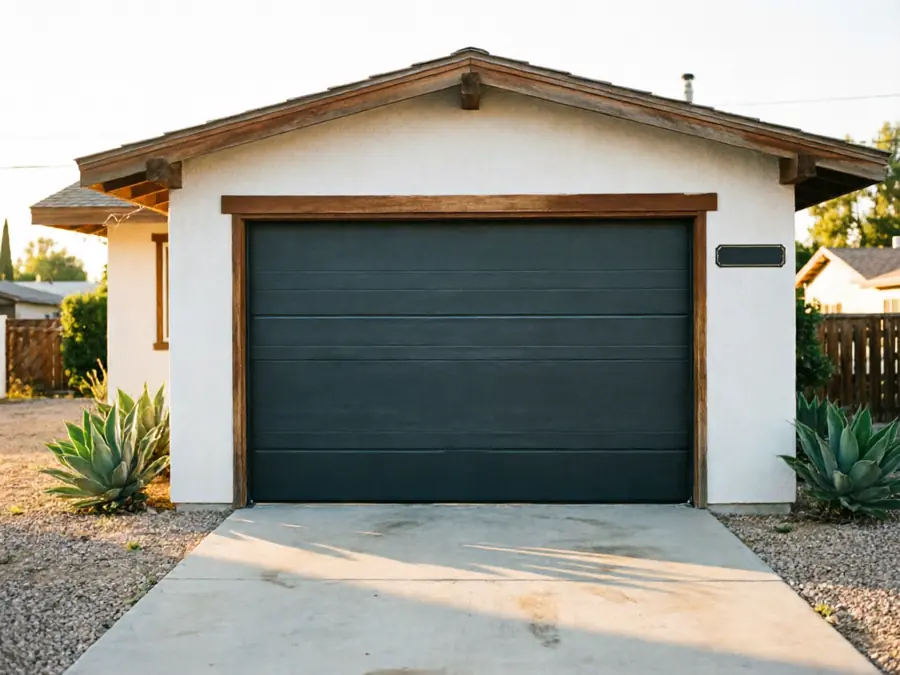
That means the doors on these garages are almost all factory steel sectional panels on torsion spring hardware, not the older extension-spring setups you still find in pre-1980 neighborhoods.
Eagle, Meridian
Eagle homes built mostly after 2000 run factory torsion springs and steel sectional doors. Meridian Garage Door Co repairs and replaces them, traveling the 6 miles from Meridian.
On the truck
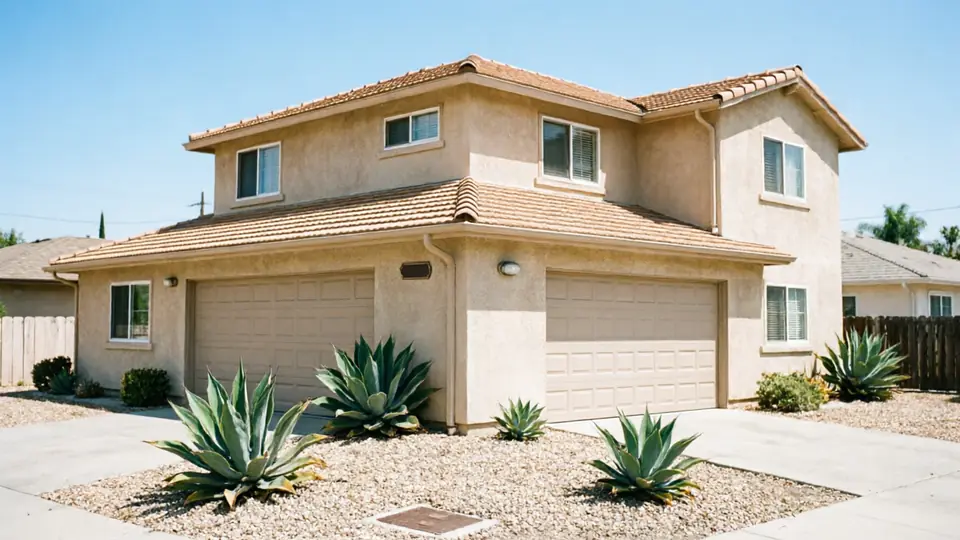
Eagle's housing stock is newer than most of the areas we cover - median build year here runs around 2005, which lines up with the broader 2003 median across the service territory.
That means the doors on these garages are almost all factory steel sectional panels on torsion spring hardware, not the older extension-spring setups you still find in pre-1980 neighborhoods.
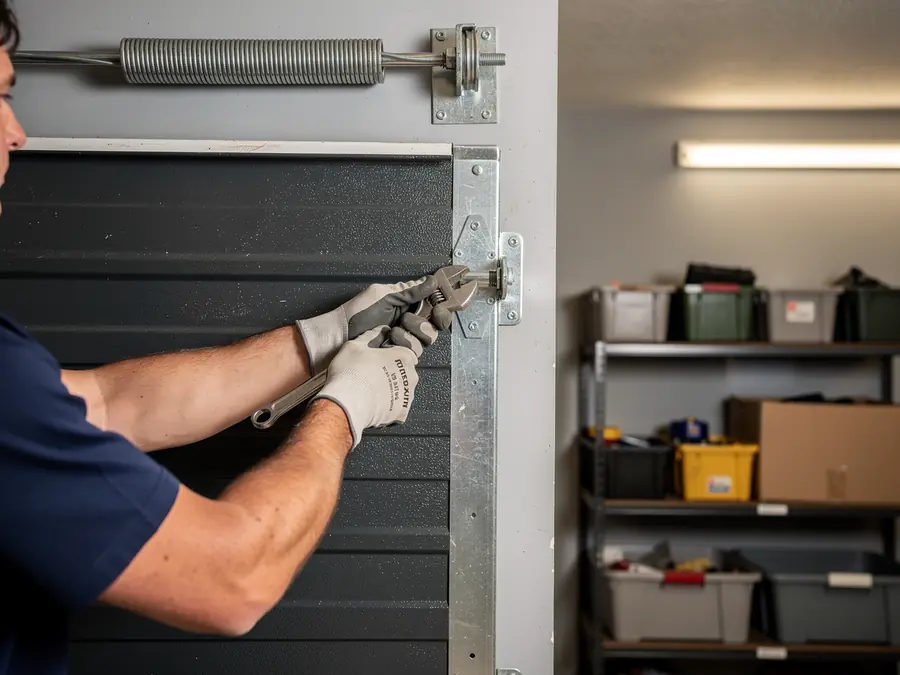
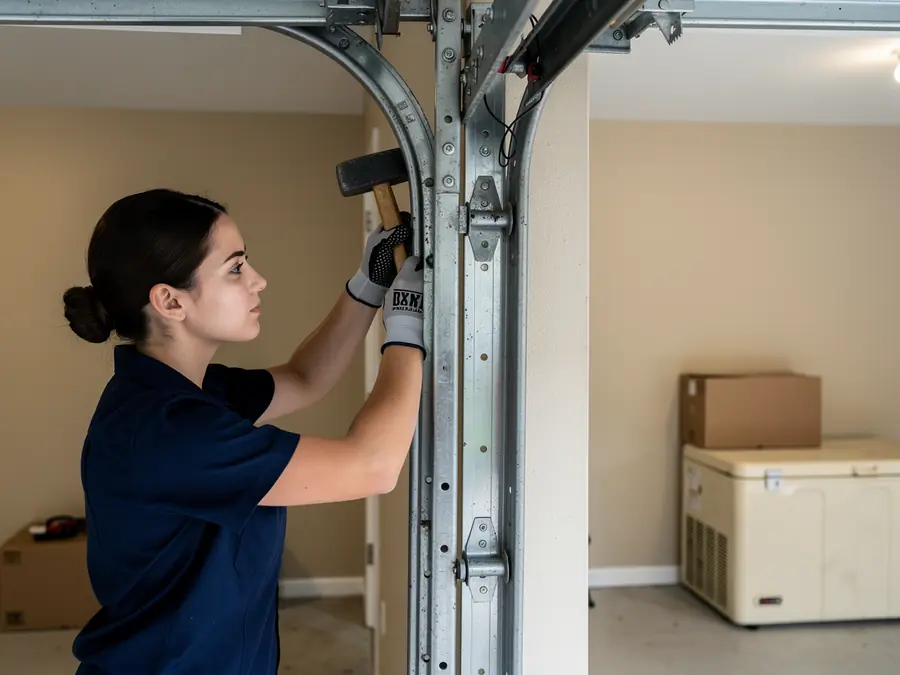
We stock torsion springs in the wind and cable sizes those doors shipped with, matching rollers (nylon and steel ball-bearing), and the drums and end bearing plates that wear out first on a 15-to-20-year-old door.
We also carry belt-drive opener parts - circuit boards, drive belts, safety sensor pairs - since belt-drive units are common in this price point of home and run quieter than the chain-drive units builders used in older subdivisions. What we don't stock on the truck: specialty insulated panel sections in custom colors. Those get ordered, and that's a wait measured in days, not hours.
Local causes
A door built in 2003 to 2008 is now old enough that its original torsion spring is near or past its cycle rating. Springs are rated for a number of open-close cycles, not years, but with household counts this size and double-income households being common at this income level, these doors cycle more than once a day on average. The spring doesn't announce it's wearing out - it just breaks, usually on a cold morning. That's the other half of it: this is a cold-climate service area, and steel contracts in low temperatures. A spring sitting right at the edge of its fatigue life is far more likely to snap when the metal is cold and stiff than in July. Builders in this era mostly used a single torsion spring rated for the door's weight with little margin, which was fine new but means less cushion now, fifteen-plus years in, as the coil gets a quarter-turn or half-turn weaker each winter.
Warning signs
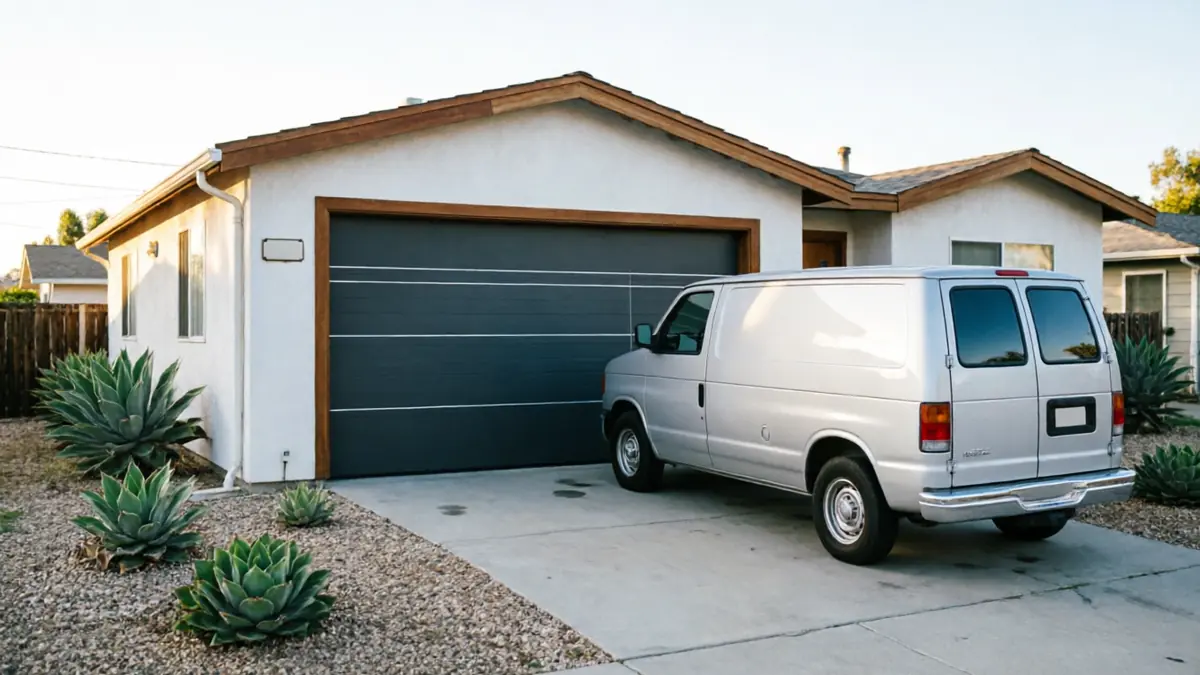
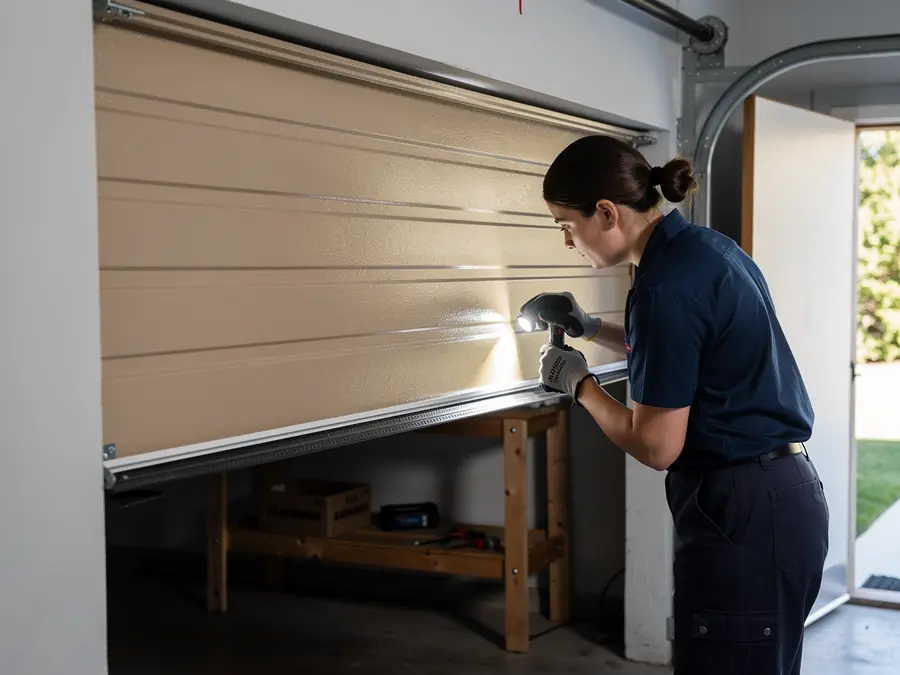
The most common call: the door won't lift, or it lifts a few inches and stops, and there's a loud bang from the spring area that happened sometime before.
On torsion setups like these, a broken spring usually means the opener tries to lift the full weight of the door alone and either stalls, trips its own safety reversal, or strips the drive gear trying.
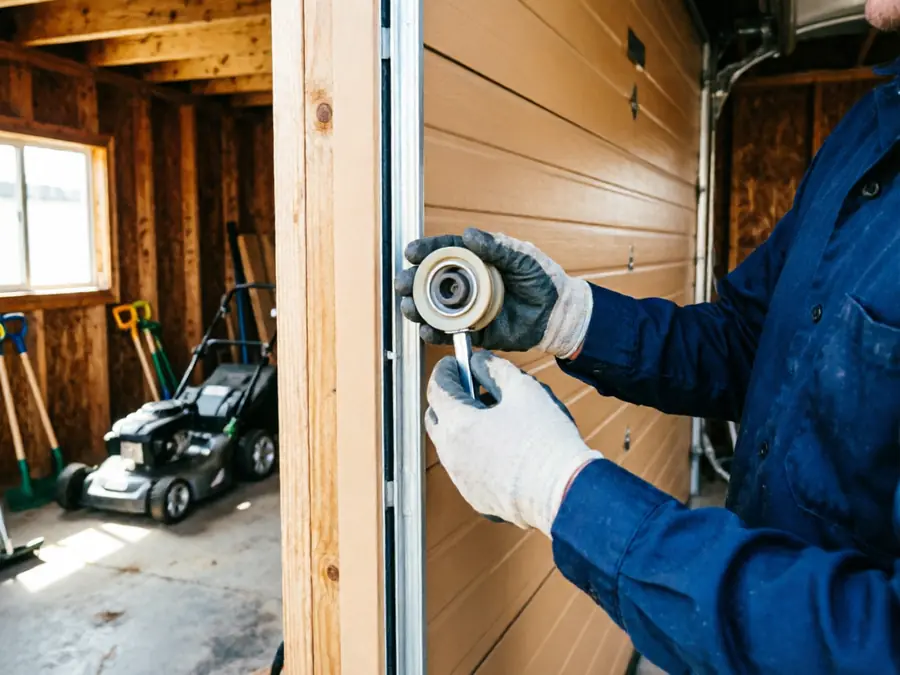
You'll also see rollers that have gone from quiet to grinding - a sign the nylon has worn thin or a bearing has seized, both typical failure points once a door passes the ten-to-fifteen-year mark.
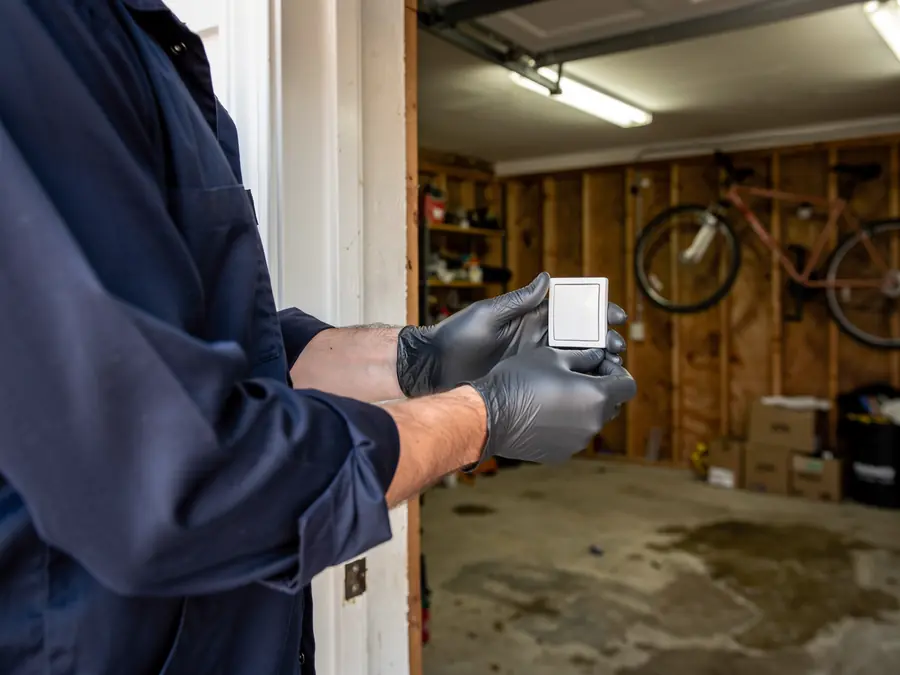
Less common but it happens: the sensor eyes near the floor go out of alignment after years of garage-floor vibration, and the door refuses to close at all, reversing a few inches up every time. Each of these points to a different fix, which is why we ask what the door is doing - not just lifting or not - before we quote anything.
The repair
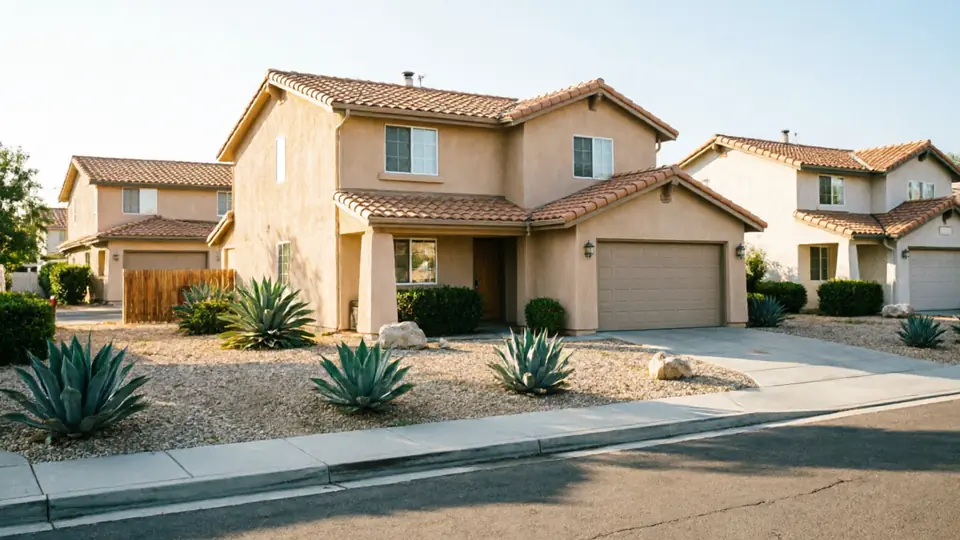
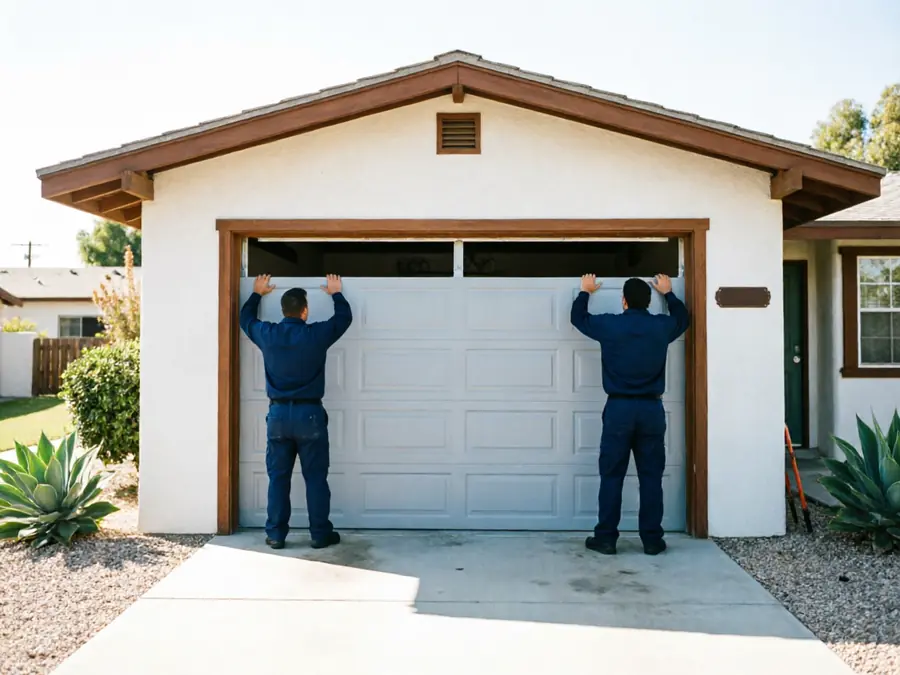
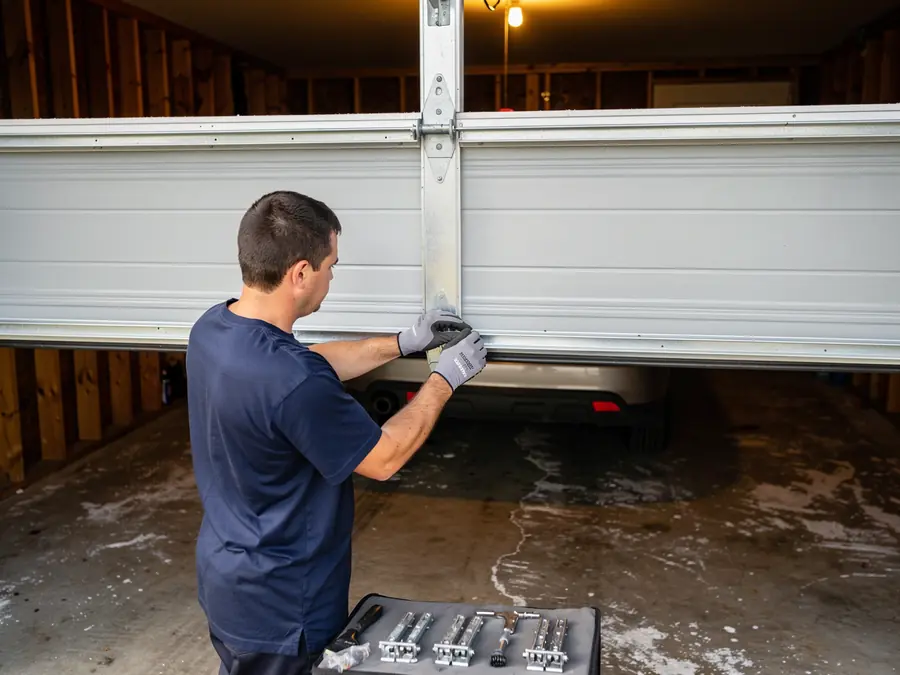
A standard torsion spring replacement on a double door runs one visit - we bring the spring, match the wind and wire size to the old one, and set the new spring's tension to the door's actual weight rather than just reusing the factory number, since a door that's picked up paint or added insulation over the years weighs a bit more than the day it was hung. Roller swaps are quick if it's a handful of worn ones, longer if the whole set and the track need attention. Opener board or sensor repairs are usually the fastest call on the list. The slow part is anything custom - an insulated panel in a non-standard color, or a torsion spring size that isn't common stock - which has to be ordered rather than pulled off the truck, and that can push a repair out several days instead of finishing same-visit.
Downtime
Most spring, roller, and sensor repairs on these 2000s-built doors finish same-visit once the part's identified, because torsion hardware from this construction era is standard enough that we carry it. What stretches the timeline is anything ordered: a specific panel color, a non-stock spring size, or an opener model that's been discontinued and needs a compatible replacement board. In those cases you're looking at the door being out of service - usable but not repaired - for however long that part takes to arrive, which we'll tell you honestly when we see what's broken rather than guessing on the phone.
DIY or pro
Rollers, yes, if you're comfortable with a ladder and the door is disconnected from the opener first - that's a reasonable DIY job. Torsion springs are not. They're wound under enough tension to cause serious injury if the winding bars slip or the wrong size goes on, and setting the tension wrong leaves you with a door that slams down or won't stay open. If the bang you heard was the spring and the door won't move, that's not a weekend project - it's a call. One honest note: if your opener is original to a 2003-era build and the board just failed, replacing a sixteen-year-old opener outright is often the better move over patching a board for a unit that's near the end of its service life anyway.
Questions
Springs wear by cycle count, not calendar age. A door built in the early-to-mid 2000s that's opened a few times a day has likely hit or passed its original spring's rated cycles by now, and cold weather makes a fatigued spring more likely to snap rather than just weaken gradually.
Most of the time, yes. Homes in this area were built with standard steel sectional doors on factory torsion hardware, and that's the hardware we stock springs, rollers, and bearing plates for. Custom panel colors or uncommon spring sizes have to be special-ordered.
Yes. We work out of Meridian and cover Eagle as part of the broader area, about 6 miles out. We don't keep a branch location here - the truck comes from Meridian for every job.
Depends on the age and the failure. If the opener is original to a 2000s build and the main board has failed, replacing the whole unit is often more sensible than sourcing a board for an aging unit, but a sensor or wiring issue is usually a straight repair.
Explore more
Ready when you are
Meridian Garage Door Co repairs and installs garage doors, springs and openers in Meridian, ID and the surrounding area.