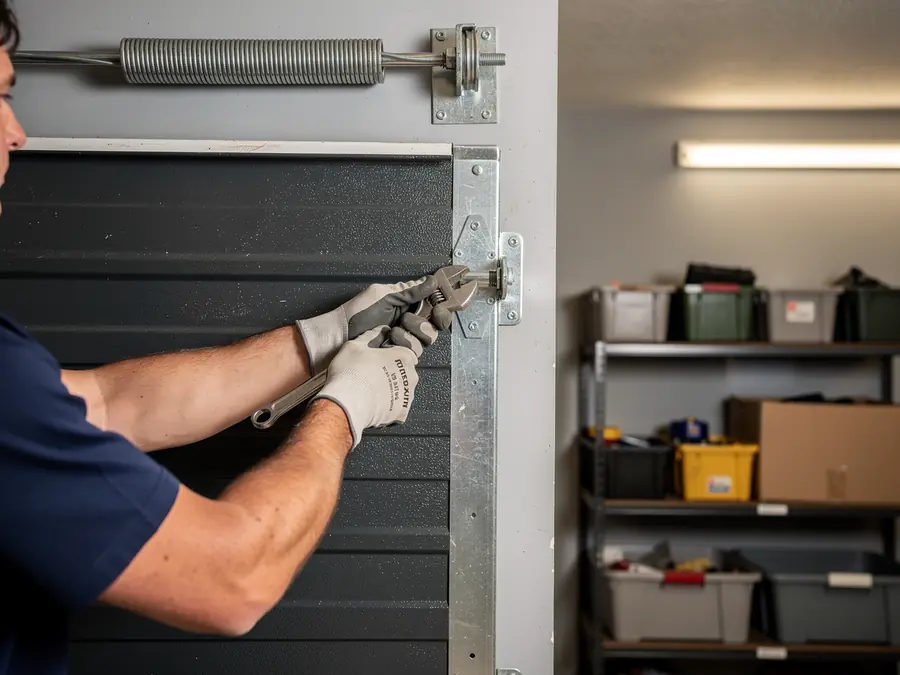
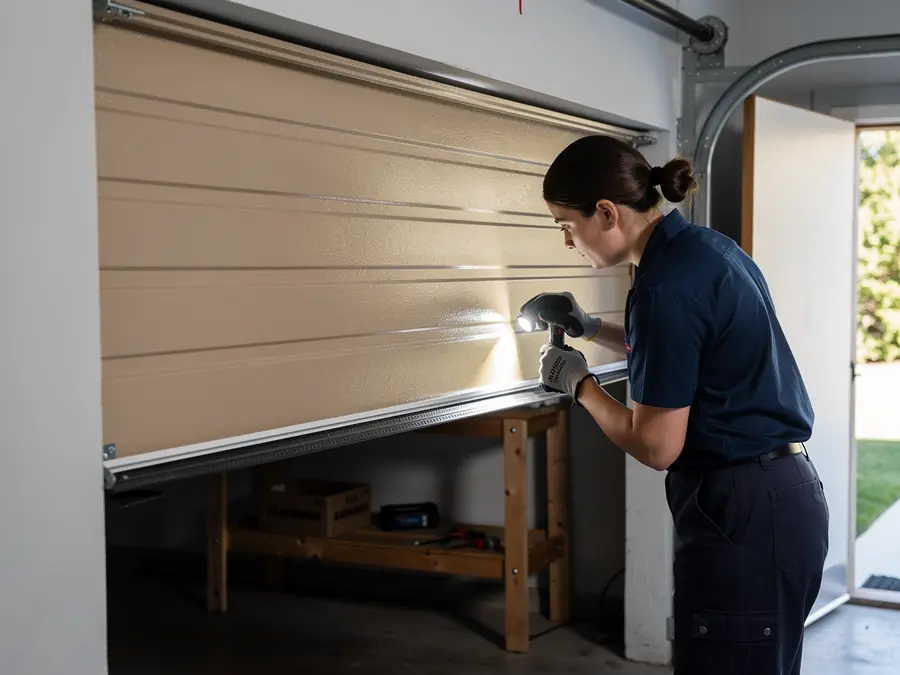
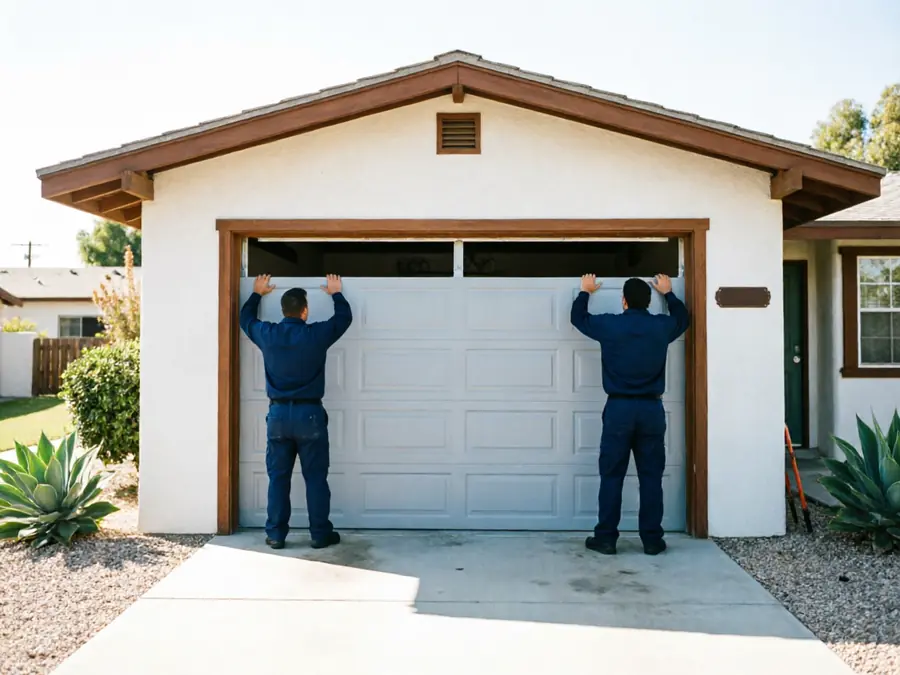
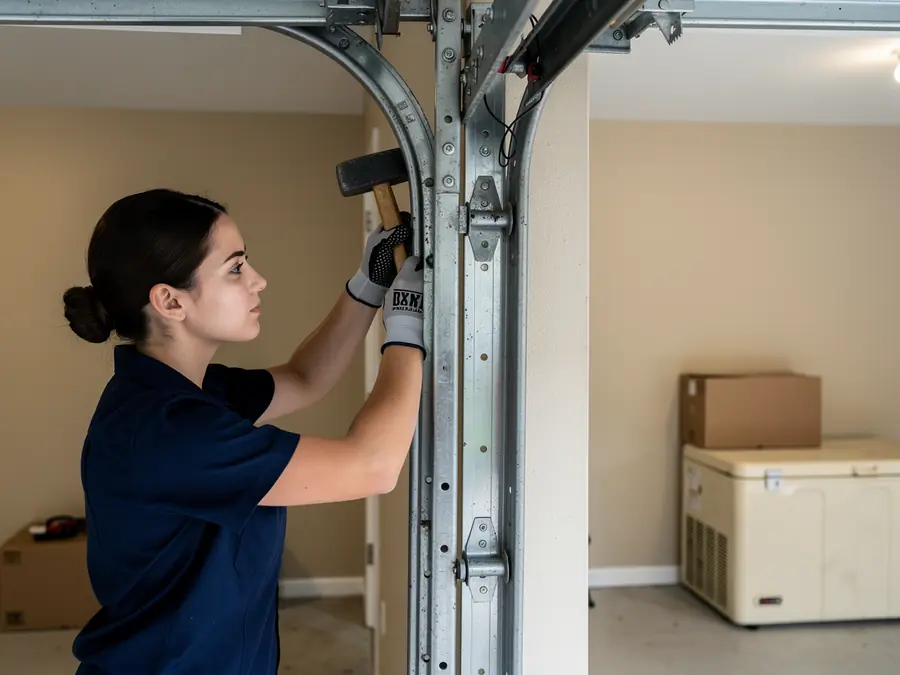
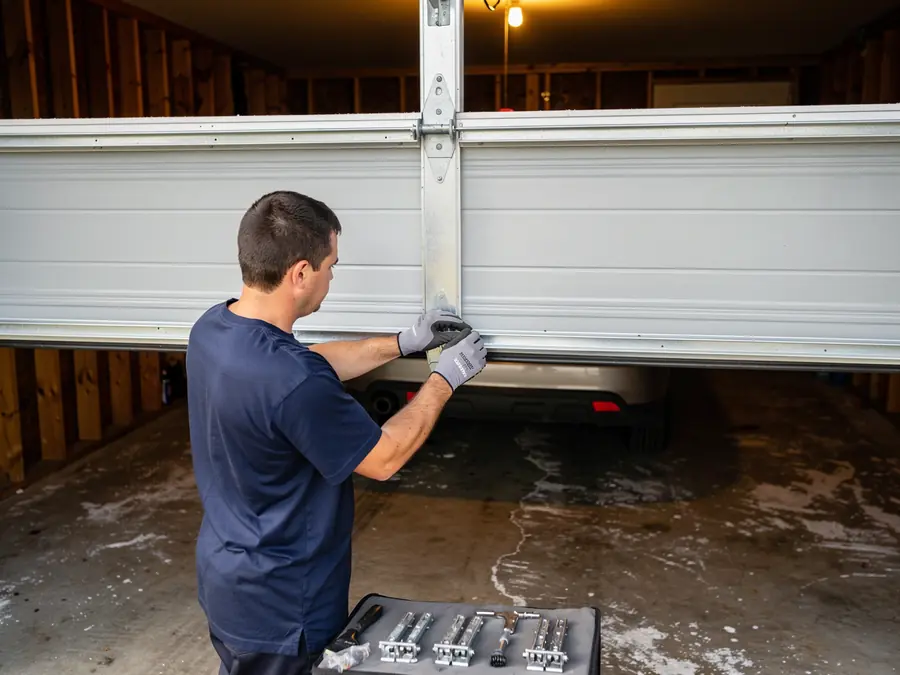
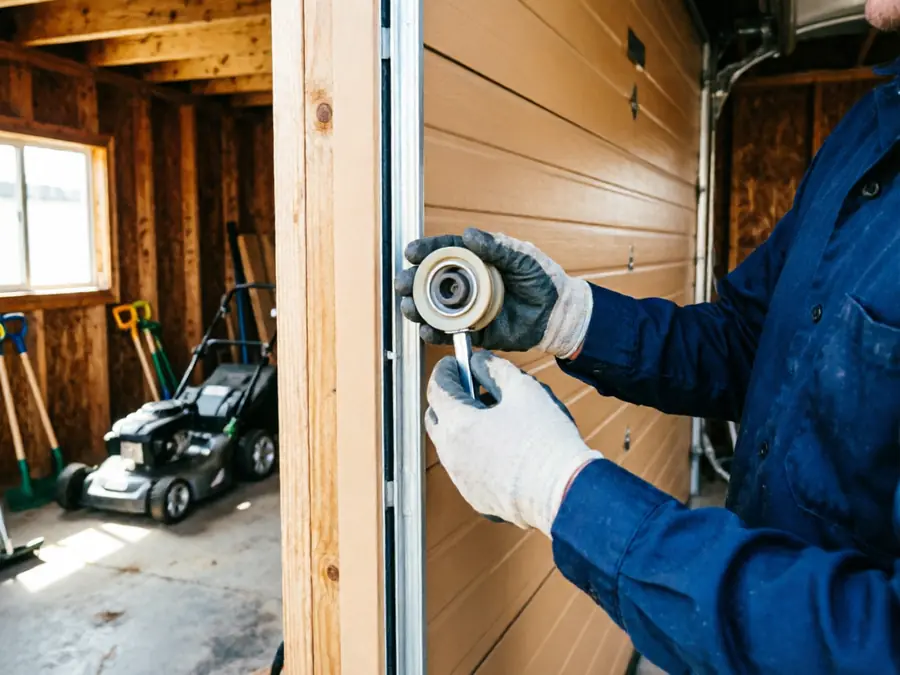
On a door this age, the failure points cluster in a few places. Torsion springs are the most common - they're rated for a certain number of open-close cycles, and a house built in 2002 has had plenty of time to use them up. Rollers are next; the original nylon rollers on doors from this era wear grooves into the track over the years, and a worn roller eventually jumps the track rather than rolling through it.
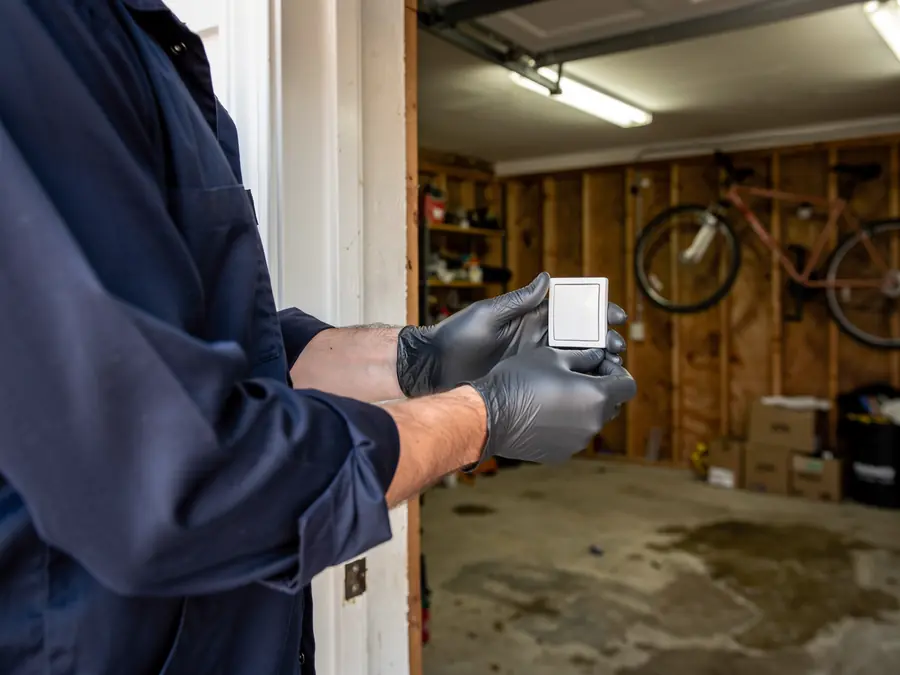
Openers fail differently. Early 2000s chain and belt drives use circuit boards that aren't made anymore, so when one of those boards goes, we're not ordering a replacement part - we're replacing the opener. That's the honest limitation here: we can't always repair hardware this old, and telling a homeowner we're ordering a part that doesn't exist anymore wouldn't be fair to them or to the job.
Cables are the quiet risk. A frayed cable on a door this age rarely announces itself before it snaps, and when it does, the door can come down unevenly. If your door is from the early 2000s and you haven't had the cables looked at, that's worth a call before it becomes an emergency instead of a scheduled visit.