Meridian, IDSame-day service/Free estimates/Licensed & insured(208) 231-4591

Emmett, Meridian

Replacing Garage Door Panels in Emmett's Older Homes

Emmett homes built since the late 1970s need steel garage door panels replaced due to severe cold damage. Meridian Garage Door Co travels in for the job.

Replacing Garage Door Panels in Emmett's Older Homes in Meridian
Serving Meridian, IDBackground-checked techsHonest, upfront pricingFast local response

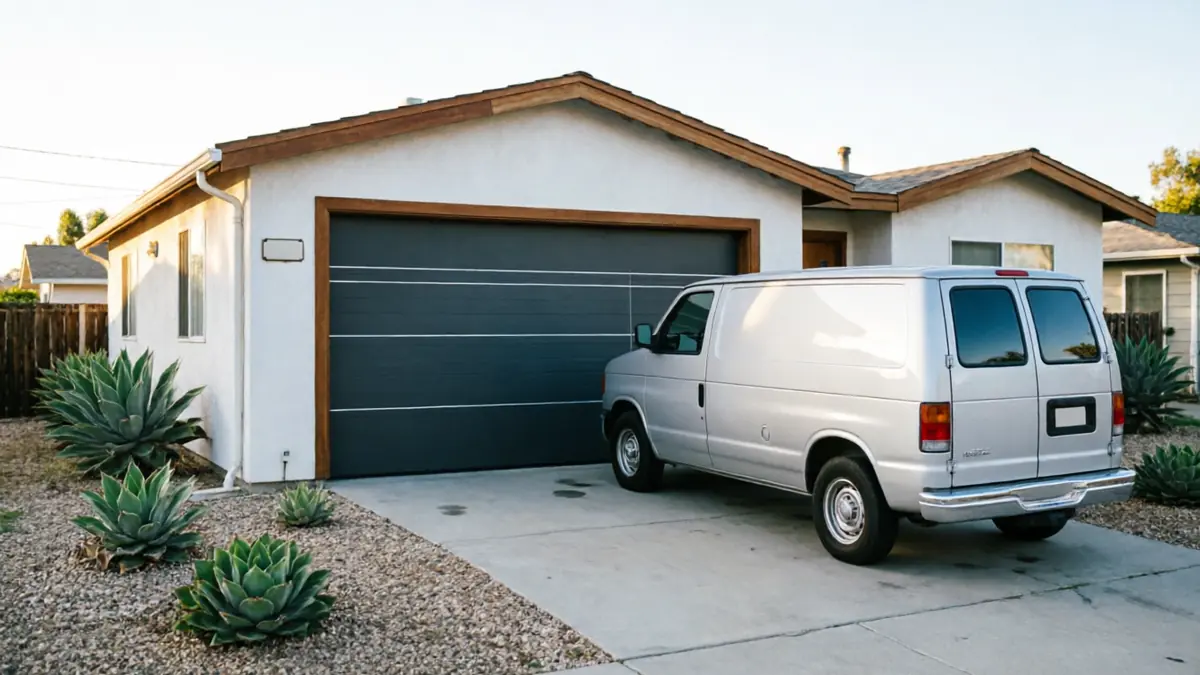
On the truck

Parts We Carry

Emmett's median year built sits at 1977, which puts a lot of these garage doors at the front edge of the steel sectional era rather than the middle of it.

Discontinued rib patterns

That matters for panels: a door installed when the neighborhood was new often used a panel height and rib pattern that newer manufacturers don't stock as a standard line anymore. Before we load the truck, we need the door's section height and the panel design, not just the brand, because a mismatched rib pattern on one section looks wrong even after the job is done right.

Common panel sections stocked

We carry common steel panel sections in the widths and heights that cover most doors from this build era, along with the hardware that goes with them - hinges, end stiles, and the fasteners sized for older track spacing. What we don't carry is a shelf full of every discontinued panel profile ever made.

Honest about pattern matches

If your door uses a pattern that's actually out of production, we'll tell you that up front instead of pretending a close match will blend in. For homes where only one or two sections took the damage, we replace just those sections rather than the whole door, as long as the rest of the panels are still sound and the match is close enough that it won't look patched.

The repair

What the Repair Takes

We come out from Meridian, which is 18 miles from Emmett, so the job starts with getting the panel measurements right the first time - section height, door width, and hinge spacing - because a second trip for the wrong part costs you a week, not a day.

  1. Section-by-section panel removal

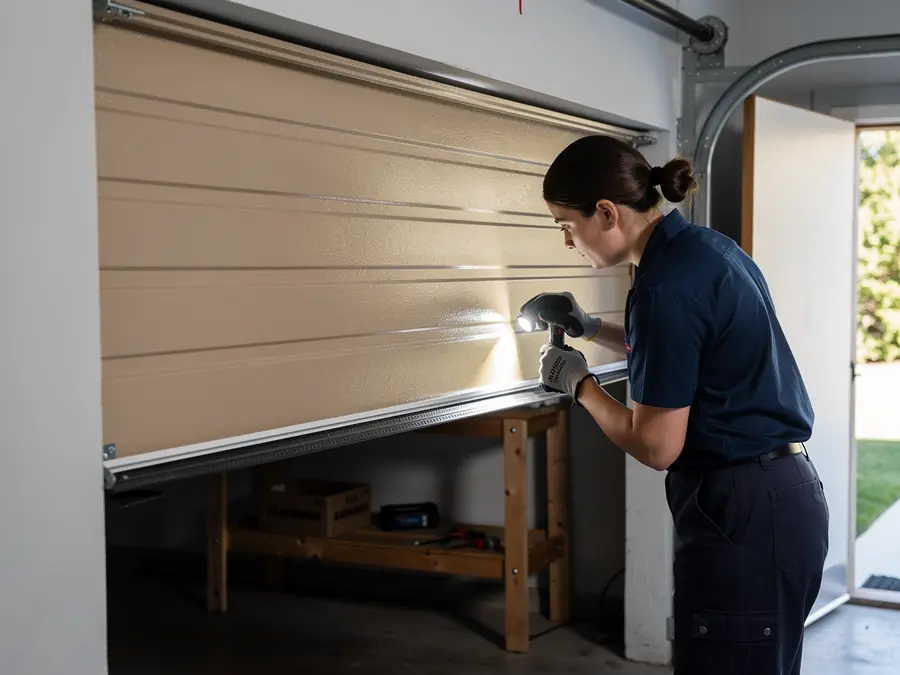
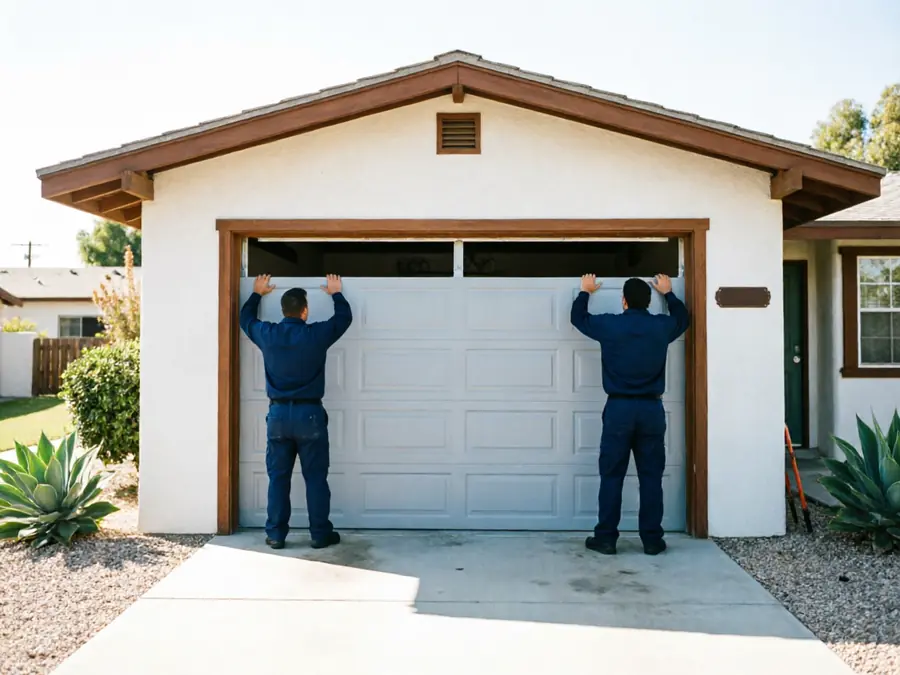
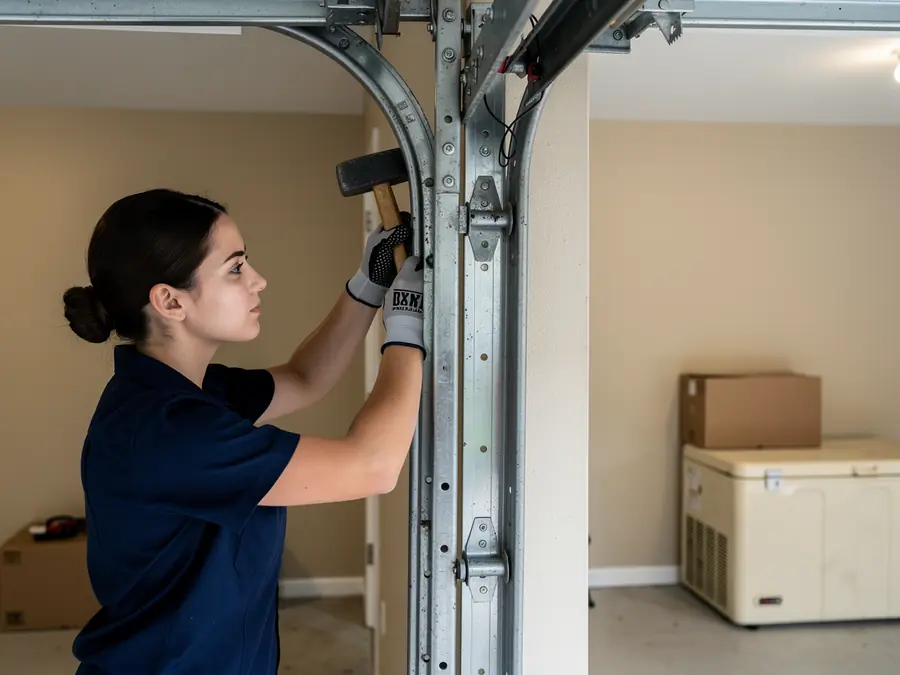
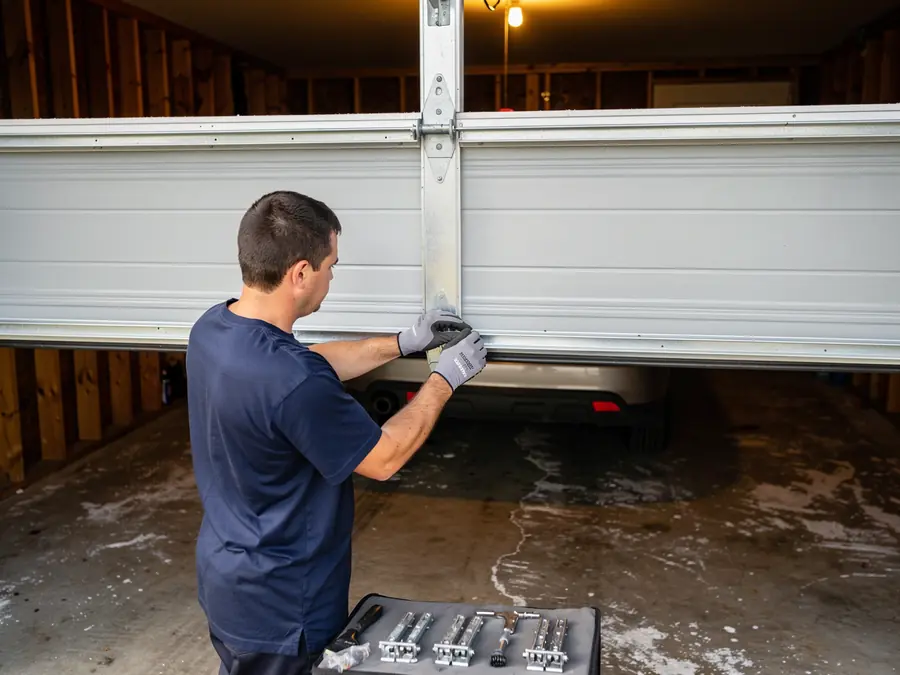
    Once we're on site, swapping a damaged section usually means pulling the door off its rollers section by section down to the damaged one, removing end hinges, and setting in the replacement before reassembling and checking the balance.

  2. Re-check spring after swap

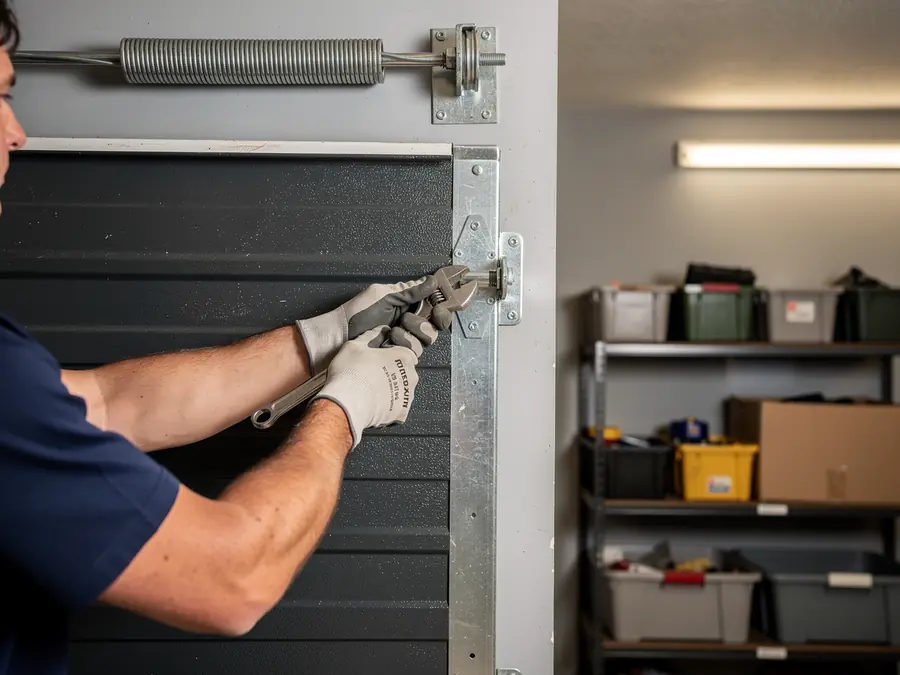
    On a torsion spring door, which is most doors built in this era, we also check spring tension after the panel swap, since a new section changes the door's weight slightly and an unadjusted spring will show up as a door that won't stay put halfway open.

  3. Opener force retest

    We test the opener's force settings too - older openers paired with a changed panel weight can start reversing early or closing too hard, and that's worth catching before you're using the door daily. We don't stock every obscure opener control board, so if the opener itself is the problem rather than the door, that's a separate conversation.

Local causes

Why This Fails Locally

Emmett sits in a climate the federal data classifies as severe cold, and steel panels built in the late 1970s and 1980s mostly weren't insulated the way panels are today - a lot of these are single-skin steel with no foam backing. Steel that thin gets brittle in hard cold, and a stray basketball hit or a bumper tap that would just dent a newer insulated panel can crack or buckle an older uninsulated one at the rib.

The other factor is age itself. A door going up in 1977 has had over four decades of freeze-thaw cycling at the bottom section, where moisture sits against the steel the longest. We see bottom panels rust through from the inside - the paint looks fine on the face, but the inside skin is pitted and weak. That's not a defect in the install; it's just what four decades of cold winters does to unprotected steel at ground level.

Income in the surrounding service area runs a median around $75,270, but Emmett itself runs lower, closer to $58,523 - which is worth mentioning because it changes the repair-versus-replace math. Replacing a couple of worn sections on an otherwise sound door is often the right call here rather than defaulting to a full door swap.
Why This Fails Locally

DIY or pro

Can You Do This Yourself

Pulling a single damaged panel on a lightweight door with the opener disconnected is within reach for someone comfortable with hand tools, and we won't tell you otherwise.

Spring overhead is hazard

The hinges are visible, the fasteners are standard, and if the door is down and the opener's unplugged, there's no stored spring energy in that specific step. Where it gets dangerous is the torsion spring overhead - that's wound under tension and it's what we don't want a homeowner loosening or adjusting, panel swap or not.

Injury risk on old doors

It's also where people get hurt on doors exactly this age, because the spring's been doing its job quietly for forty-plus years and nobody's thought about it until now. The other honest limit: matching a discontinued rib pattern by eye from a hardware store panel rarely works.

Visible mismatch on sunny days

If the match is off even slightly, it'll show on every sunny day for as long as you own the door. That's the part we'd rather measure and order correctly than have you guess at twice.

Warning signs

How It Shows Up

The most common thing we hear from Emmett callers is a dent that didn't used to be there - a bumper tap, a dropped ladder, something that left a crease in one section rather than taking out the whole door.

Creased panel cracking

On an insulated newer door that might just be cosmetic; on an older uninsulated steel panel, that crease is often where the metal has actually cracked along the rib, and it'll worsen with the next hard freeze.

Rust from inside bottom

The other pattern is a bottom section that's gone soft or flaky along the edge closest to the ground - that's the rust-from-the-inside problem showing up after years of moisture sitting against unprotected steel. You'll sometimes catch it as a faint reddish bleed through the paint before it's visible as actual pitting.

One-side binding from bend

Less obvious but just as common: a door that now binds or drags in the track only on one side. That's usually a section that's slightly bent rather than cracked, throwing the whole panel stack out of alignment as it travels. It still opens, but it's working harder than it should, and that wear compounds.

Questions

Common questions

Will a replacement panel match my door exactly?

We match section height and rib pattern as closely as current stock allows. On doors from Emmett's build era, an exact factory match isn't always possible if the original profile is discontinued - we'll tell you before the job starts if that's the case so you're choosing with full information.

Do you have a branch in Emmett?

No. We're based in Meridian, about 18 miles out, and travel to Emmett for jobs. There's no local depot here, so parts come with us on the truck based on the measurements we take or you provide ahead of time.

Is it cheaper to replace one panel or the whole door?

It depends on the door's age and condition overall. If the rest of the sections are sound, replacing one or two damaged panels is usually the lower-cost route, and it's often the right call on an otherwise serviceable door from this era.

Why did my steel panel crack instead of just dent?

Doors built in Emmett's main era of growth, late 1970s onward, often used single-skin steel without foam insulation. In a severe cold climate, that steel gets brittle, so an impact that would dent a newer insulated panel can crack an older uninsulated one along the rib.

Ready when you are

Need a garage door sorted in Meridian?

Meridian Garage Door Co repairs and installs garage doors, springs and openers in Meridian, ID and the surrounding area.

Certified Experts Quality Assured
Call Now(208) 231-4591